Roast Pork Loin Recipe
Juicy roast pork loin recipe with herb crust — step-by-step guide for tender results in under an hour. Perfect for weeknights!
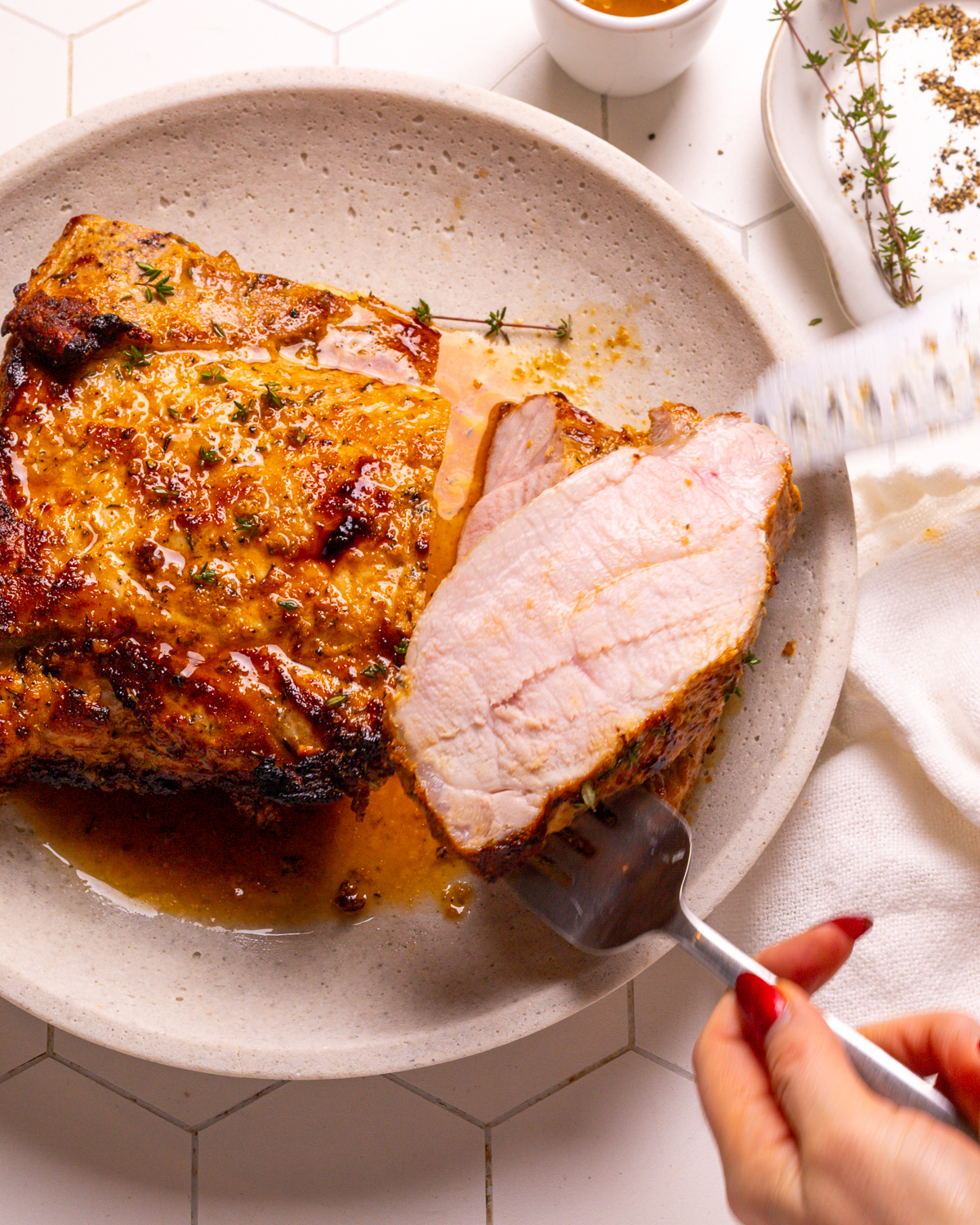
This roast pork loin recipe delivers juicy, flavorful pork every time with a simple herb crust and precise temperature guidance. Unlike tough supermarket roasts, this method guarantees tender results that slice beautifully. The secret is in the dry brine and resting period — two simple steps that transform your dinner.
Why You’ll Love This Roast Pork Loin
- Perfectly juicy every time — dry brining draws out moisture, then reabsorbs seasoned liquid for maximum flavor.
- Simple 5-ingredient crust — paprika, garlic powder, rosemary, and black pepper create restaurant-quality seasoning.
- One pan cleanup — no complicated pan sauces or separate cooking steps.
- Great for meal prep — roasted pork slices hold well in the fridge for 4 days.
Ingredients
- 4-5 lbs pork loin roast (Boneless, center-cut with fat cap intact)
- 2 tbsp kosher salt (Plus 1 tsp for seasoning)
- 1 tsp black pepper (Freshly ground)
- 2 tsp paprika (Smoked or sweet)
- 1 tsp garlic powder
- 1 tsp dried rosemary (Crushed between palms before applying)
Equipment
- Large roasting pan or rimmed baking sheet
- Meat thermometer (instant-read or probe)
- Small bowl for dry brine
- Aluminum foil for tenting
How to Make Roast Pork Loin
Step 1 — Dry brine the pork (12-24 hours)
Remove pork from fridge 30 minutes before starting. Pat completely dry with paper towels. Mix 2 tbsp kosher salt with 1 tsp black pepper, paprika, garlic powder, and rosemary. Rub mixture evenly over entire roast, pressing to adhere. Transfer to a wire rack set over a baking sheet. Refrigerate uncovered for 12-24 hours. This draws out moisture, then reabsorbs seasoned liquid — the difference between juicy and dry.
Step 2 — Preheat oven (30 minutes before roasting)
Remove pork from refrigerator 30 minutes before roasting. Preheat oven to 425°F. If your oven runs hot or you prefer lower temperatures, use 400°F instead. Let the pork sit at room temperature while oven preheats — this ensures even cooking.
Step 3 — Roast to temperature (1-1.5 hours)
Place pork on wire rack in roasting pan. Roast at 425°F until internal temperature reaches 145°F in the thickest part, about 1 hour. Use a probe thermometer inserted into the center — avoid touching bone. If the surface browns too quickly, tent loosely with foil.
Step 4 — Rest and slice (15 minutes)
Transfer pork to a cutting board or platter. Tent loosely with foil and rest for 15 minutes. Internal temperature will rise to 150°F — this is the safe, juicy endpoint. Slicing too early releases juices and leaves pork dry.
Pro Tips
Temperature matters more than time — a 3-lb roast might finish in 45 minutes, a 6-lb roast could take 1.5 hours. Use a thermometer.
Don’t skip the dry brine — even 12 hours makes a noticeable difference in moisture retention.
Variations & Substitutions
Herb-crusted version: Add 1 tbsp fresh thyme and 1 tsp lemon zest to the seasoning rub.
Lower carb: Serve with cauliflower mash instead of potatoes — same creamy result.
Meal prep friendly: Slice leftovers for salads, sandwiches, or grain bowls.
Storage & Reheating
Refrigerator: Slice pork stores up to 4 days in an airtight container. Freezer: Uncooked roast freezes well for 3 months; wrap tightly in plastic wrap + foil. Reheating: 300°F oven until warmed through, or slice thin and reheat in a skillet with a splash of broth.
What to Serve With Roast Pork Loin
creamy garlic mashed potatoes
roasted green beans with lemon
apple and cucumber salad
Nutrition Information
Per serving (assuming 8 servings): approximately 420 calories, 35 g protein, 2 g carbohydrates, 28 g fat, 0 g fiber. Values are estimates based on standard pork loin.
Frequently Asked Questions
How do I know when pork is done?
Use an instant-read thermometer inserted into the thickest part. Pork is safe to eat at 145°F internal temperature, which yields juicy, slightly pink meat. Over 155°F starts drying it out.
Should I cover pork loin with foil?
No need to cover during roasting unless the surface browns too quickly — tent loosely if needed. The dry brine creates a flavorful crust that foil would steam.
Can I roast this at 350°F instead?
Yes, but it’ll take about 30-45 minutes longer. Lower temperatures can be gentler on lean cuts, though 425°F works well with proper brining.
What’s the difference between pork loin and pork tenderloin?
Pork loin is larger, thicker, and more economical. Tenderloin is smaller, extremely lean, and cooks much faster — adjust time accordingly.
This roast pork loin comes together with pantry staples and rewards you with dinner that feels special yet requires minimal effort. By following the precise dry-brine and resting steps, you get a restaurant-quality centerpiece that will become a weeknight staple in your rotation. For more on pork safety and safe cooking temperatures, see the USDA Food Safety and Inspection Service at USDA. If you want detailed pan-searing techniques and flavor development tips, check out the cooking science articles on Serious Eats. Feel free to experiment with herb variations or serve the sliced pork over a simple arugula salad with a drizzle of lemon vinaigrette for a lighter twist; the versatility makes it a reliable go-to for busy evenings. Leftovers also work beautifully in tacos or grain bowls, extending the life of your roast across multiple meals.