Harissa Meatballs with Whipped Feta
One-pan roasted spiced harissa meatballs served with whipped feta and roasted veggies. This flavorful dinner brings North African spices to your table in under
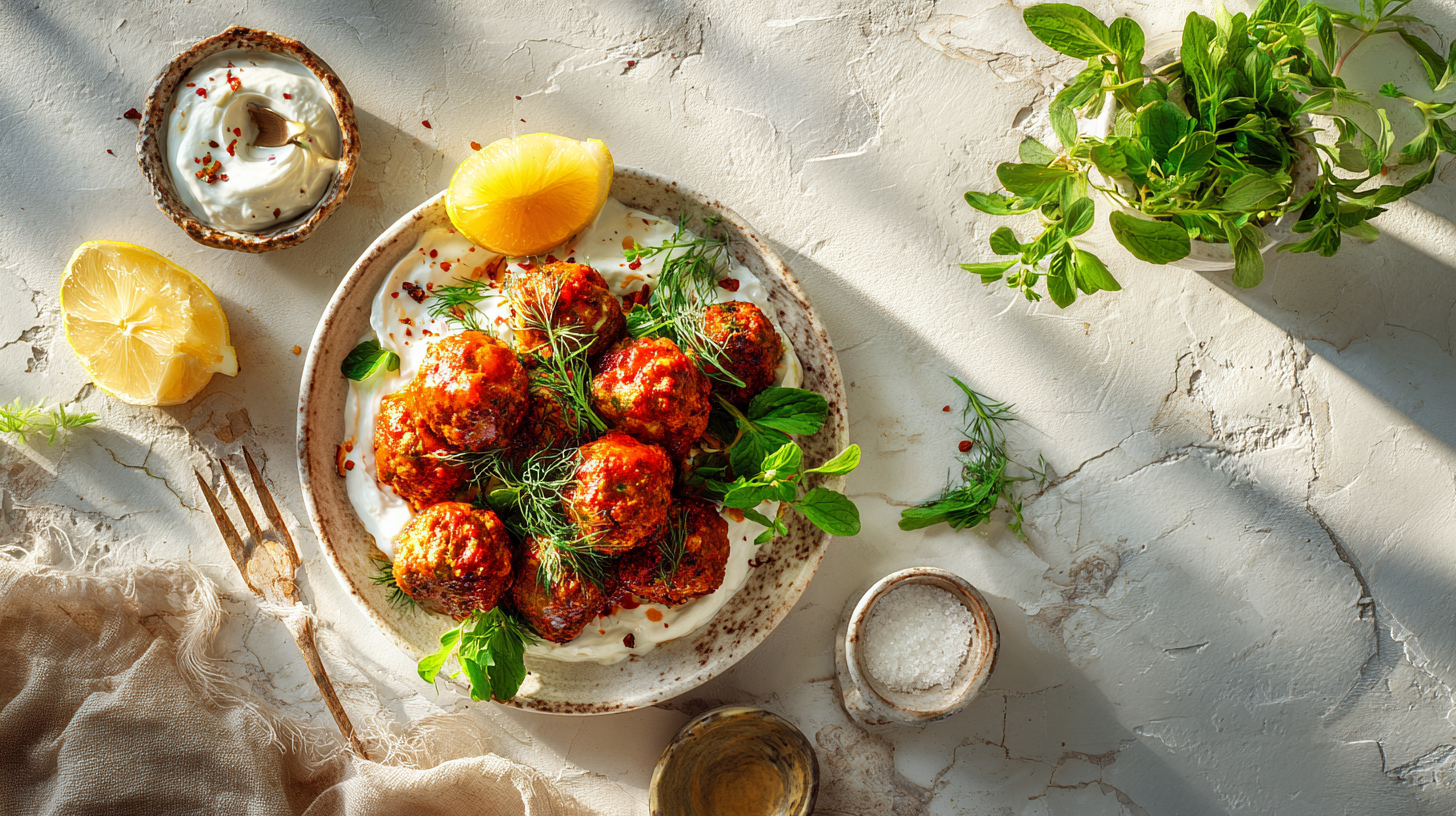
Harissa Meatballs with Whipped Feta
Spiced harissa meatballs served over cloud-like whipped feta — a Mediterranean-inspired meal that brings bold North African flavors together with creamy Greek-style cheese for an unforgettable dinner experience.
The magic of this dish lies in the contrast between the spicy, warming harissa-spiced meatballs and the cool, tangy whipped feta. Each bite delivers multiple flavor dimensions — the cumin and coriander in the meatballs, the chili heat from the harissa, the garlic and herbs in the feta, and the brightness of lemon that ties everything together.
This recipe transforms simple ingredients into something restaurant-worthy. The meatballs are tender and juicy, thanks to the panade (bread-soaking technique) that keeps them moist even if slightly overcooked. The whipped feta is deceptively simple — just four ingredients processed until silky smooth — but creates an incredible sauce-like base for the meatballs.
Perfect for entertaining or elevating a weeknight dinner, this dish looks impressive but comes together in under 40 minutes. Serve it as a mezze spread with warm pita and olives, over couscous or rice for a complete meal, or stuffed into pita pockets for an incredible sandwich. The flavors are sophisticated enough for guests but approachable enough for the whole family.
Prep Time: 20 min
Cook Time: 18 min
Total Time: 38 min
Servings: 4
Why You’ll Love This Recipe
This dish solves the “same old dinner” problem with bold, complex flavors that feel exotic yet comforting. The combination of harissa-spiced meat and creamy whipped feta is unexpected but absolutely addictive. It’s endlessly versatile — serve as an appetizer, main course, or sandwich filling depending on the occasion.
The make-ahead potential is excellent too. Meatballs can be formed and refrigerated for up to 8 hours before cooking. Whipped feta keeps for 3 days in the fridge and actually improves as flavors meld. This makes it perfect for meal prep or dinner parties where you want to do most of the work ahead of time.
Ingredients
- 1 lb ground lamb (or beef) — lamb provides authentic Mediterranean flavor; beef works beautifully too
- 1/4 cup breadcrumbs — fresh or dried both work; panko gives extra texture
- 2 tbsp milk — for soaking breadcrumbs (the panade technique)
- 2 tbsp harissa paste — adjust to taste; start with less and add more if you love heat
- 1 tsp ground cumin — toast whole seeds and grind for maximum flavor
- 1 tsp ground coriander — pairs beautifully with cumin and lamb
- 1/2 tsp cinnamon — the secret ingredient that adds warmth and depth
- 1/2 tsp salt and 1/4 tsp black pepper — season assertively; meat needs more salt than you think
- 1 egg, lightly beaten — binds the mixture without making it dense
- 2 cloves garlic, minced — fresh only for the best flavor
- 1/2 small onion, finely grated — grating releases more flavor than chopping
- 8 oz feta cheese, crumbled — buy block feta in brine for superior taste and texture
- 1/4 cup olive oil (plus 2 tbsp for meatballs) — extra virgin for the feta, regular for cooking
- 2 tbsp Greek yogurt — adds tang and helps create silky texture in whipped feta
- 1 tbsp lemon juice — brightens the feta and cuts the richness
- 1 tsp dried oregano — or 1 tbsp fresh, chopped
- Fresh mint and parsley for garnish — don’t skip; herbs provide essential freshness
The Magic of Harissa
Harissa is a North African chili paste that’s become a global sensation for good reason. Made with roasted red peppers, hot chilies, garlic, olive oil, and warm spices like cumin and coriander, it adds complex heat and depth to any dish. Unlike plain hot sauce, harissa brings layers of flavor — smoky, spicy, earthy, and bright all at once.
Look for harissa in tubes or jars at well-stocked grocery stores. Brands like Mina and Les Moulins Mahjoub are excellent. You can also make your own by blending roasted red peppers, chili powder, garlic, olive oil, and spices — but store-bought is perfectly fine and saves time.
Whipped Feta: Technique Tips
The secret to cloud-like whipped feta is using a food processor (not a blender) and adding the olive oil slowly while processing. Start with room-temperature feta for the smoothest result — cold feta won’t break down as easily. Add the Greek yogurt and lemon juice for tang and silkiness.
Process for a full 2-3 minutes until the mixture is completely smooth and has lightened in color. It should be like thick Greek yogurt — scoopable but not runny. If too thick, add another teaspoon of olive oil. If too thin, add a bit more feta. Taste and adjust — it should be tangy, salty, and garlicky.
Meatball Mastery
Great meatballs start with the right mix of meats and the panade technique. The breadcrumbs soaked in milk (called a panade) keep the interior moist even if slightly overcooked. Don’t overmix the meat or the texture becomes dense and rubbery. Mix just until ingredients are combined, then form gently with damp hands.
A small cookie scoop ensures uniform size so they cook evenly. Aim for 1.5-inch balls — about 16-20 meatballs total. The spice blend of cumin, coriander, and cinnamon is what makes these special — don’t skip the cinnamon, it adds an unexpected warmth that elevates the entire dish.
Equipment Needed
- Large skillet or sheet pan — skillet for stovetop cooking, sheet pan for oven method
- Food processor — essential for silky-smooth whipped feta
- Mixing bowl — for combining meatball ingredients gently
- Small cookie scoop — for uniform meatballs that cook evenly
- Microplane — for grating onion and garlic if preferred
- Rubber spatula — for scraping every bit of whipped feta from the processor
Instructions
- Step 1: Make the Panade — In a small bowl, mix breadcrumbs and milk. Let sit for 5 minutes until the milk is absorbed and the breadcrumbs are soft. This mixture keeps the meatballs incredibly moist and tender, even if slightly overcooked. Don’t skip this step — it’s the secret to restaurant-quality texture.
- Step 2: Mix Meatball Base — In a large bowl, combine ground meat, soaked breadcrumbs, harissa, cumin, coriander, cinnamon, salt, pepper, egg, garlic, and grated onion. Use your hands or a fork to mix just until combined. Overmixing develops the proteins and makes meatballs tough. The mixture should be uniform but not overworked.
- Step 3: Form Meatballs — With damp hands, form mixture into 1.5-inch balls (about 16-20 total). Place on a plate or baking sheet as you work. If the mixture is too sticky, refrigerate for 15 minutes to firm up. Uniform size ensures even cooking — no one wants some overcooked while others are still raw inside.
- Step 4: Cook the Meatballs — Heat 2 tablespoons olive oil in a large skillet over medium-high heat. Add meatballs in a single layer, working in batches if needed. Sear for 8-10 minutes total, turning gently to brown all sides. They’re done when browned and internal temperature reaches 165°F. Transfer to a plate and tent with foil to keep warm.
- Step 5: Whip the Feta — While meatballs cook, combine feta, olive oil, Greek yogurt, lemon juice, minced garlic, and oregano in a food processor. Process for 2-3 minutes, scraping down sides halfway, until completely smooth, pale, and fluffy. The transformation is remarkable — chunky cheese becomes a silky, mousse-like spread. Taste and adjust seasoning.
- Step 6: Assemble and Serve — Spread whipped feta on a serving platter or divide among plates. Arrange warm meatballs on top. Drizzle with a little extra olive oil, sprinkle with fresh mint and parsley, and serve immediately. The contrast of warm spiced meatballs on cool, tangy feta is absolutely divine. Offer warm pita, couscous, or rice on the side.
Sauce Variations
While whipped feta is classic, these meatballs work with countless sauces. Try a lemon-tahini sauce for nutty richness, a yogurt-dill sauce for cooling contrast, or a pomegranate molasses glaze for sweet-tart complexity. Each sauce transforms the dish into something new while the spiced meatballs remain the constant, crowd-pleasing star.
Serving Style Options
Mediterranean Platter: Serve meatballs over the whipped feta with warm pita, olives, cucumber slices, and pickled onions for a shareable mezze-style meal that’s perfect for entertaining.
Grain Bowl: Place meatballs and feta over couscous, quinoa, or rice with roasted vegetables for a complete, satisfying dinner that covers all the food groups.
Pita Sandwich: Stuff meatballs, feta, and fresh vegetables into warm pita pockets for an incredible handheld meal that’s perfect for lunch or casual dinners.
Appetizer: Skewer meatballs with toothpicks and serve on a platter of whipped feta for an elegant party starter that disappears fast.
Wine and Beverage Pairing
The North African spices in harissa pair beautifully with Grenache-based wines or a fruit-forward Zinfandel. For white wine lovers, an off-dry Riesling balances the heat perfectly. Non-alcoholic options include mint tea (traditional in North Africa), sparkling water with cucumber, or a light lemonade. A cold lager like Stella Artois or Heineken provides crisp refreshment between spicy bites.
Storage and Meal Prep
Meatballs keep beautifully in the refrigerator for up to 4 days and actually improve as flavors meld. Reheat gently in a 350°F oven for 10-12 minutes. The whipped feta keeps for 3 days refrigerated — bring to room temperature before serving for the best texture. Both components freeze well for up to 3 months; thaw overnight in the refrigerator before reheating.
For meal prep, form raw meatballs and refrigerate for up to 8 hours before cooking. The whipped feta can be made up to 3 days ahead. When ready to eat, cook the meatballs fresh and assemble — dinner is on the table in 15 minutes.
Nutrition Information
| Calories | 465 |
| Protein | 28g |
| Carbohydrates | 12g |
| Fat | 34g |