Smoked Gouda Mac and Cheese
Smoked Gouda mac and cheese with a smoky, creamy sauce that beats the box every time. The trending cheese that makes classic mac extraordinary.
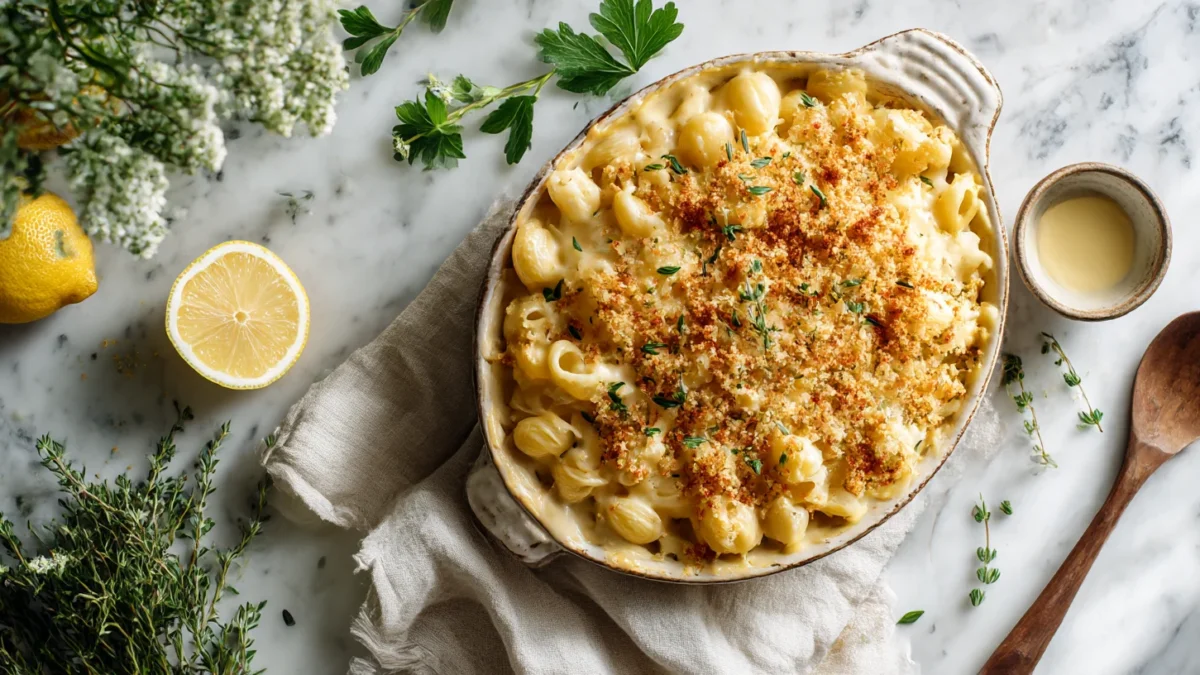
There is mac and cheese, and then there is smoked Gouda mac and cheese — a version that hits different from the first bite. Smoked Gouda brings a deep, almost bacony warmth that regular cheese simply cannot replicate, layering a campfire-like richness into every forkful of creamy sauce. Paired with sharp cheddar for tang and baked under a blanket of golden breadcrumbs, this is the kind of dish that disappears from the casserole before it even hits the table. Whether you are making it for a holiday side or a weeknight main, this recipe delivers the kind of comfort that makes people close their eyes and go quiet.
Why You’ll Love This Smoked Gouda Mac And Cheese
- Smoked Gouda changes everything — its deep, woodsy flavor adds a complexity that standard mac and cheese lacks entirely. One bite and you will never go back to using only cheddar.
- Two-cheese sauce for depth — smoked Gouda provides the smoky richness while sharp cheddar brings the tangy bite that keeps the sauce from tasting flat or one-dimensional.
- Crispy breadcrumb topping — the contrast between the crunchy, buttered crumbs and the molten cheese sauce below is what separates baked mac and cheese from the stovetop version.
- Feeds a crowd — this recipe makes 8 generous servings, making it ideal for potlucks, holidays, or meal prep.
- Make-ahead friendly — assemble it hours before baking and refrigerate. Add 10 minutes to the bake time if it goes in cold.
- Better than the box, not much harder — the roux takes 5 minutes. The cheese sauce takes another 5. You are 10 minutes of real work away from something that tastes like it came from a restaurant.
Ingredients
Smoked Gouda is regular Gouda that has been exposed to smoke from hardwood chips — typically hickory or oak — which infuses the cheese with a deep, savory, almost meaty quality. It melts beautifully into sauces because of its naturally high moisture content, but it brings a flavor punch that regular Gouda (mild, buttery, slightly sweet) simply cannot match. Look for blocks labeled 'smoked Gouda' or 'Gouda with smoke flavor' — avoid the processed smoked cheese slices, which contain stabilizers that will make your sauce gluey.
- 1 pound (16 oz) elbow macaroni (Cook it 1 minute short of al dente — it will continue softening in the oven. Overcooked pasta turns mushy after baking.)
- 12 oz (about 3 cups grated) smoked Gouda, freshly grated (Buy a block and grate it yourself. Pre-shredded cheese is coated in anti-caking agents that prevent it from melting smoothly into the sauce.)
- 8 oz (about 2 cups grated) sharp cheddar, freshly grated (Sharp or extra-sharp — the tang is important. It cuts through the richness of the Gouda and keeps the sauce from tasting heavy.)
- 4 tablespoons (1/2 stick) unsalted butter (Half goes into the roux, half gets tossed with the breadcrumbs for the topping.)
- 3 tablespoons all-purpose flour (This is your roux thickener. Three tablespoons gives a sauce that coats the pasta without being pasty.)
- 2 1/2 cups whole milk (Warm it in the microwave for 90 seconds before adding to the roux. Cold milk slows the sauce and can cause lumps.)
- 1/2 cup heavy cream (This is what pushes the sauce from good to velvety. Do not skip it.)
- 1 teaspoon mustard powder (It does not make the sauce taste like mustard — it amplifies the cheese flavor and adds a subtle sharpness.)
- 1/2 teaspoon smoked paprika (Echoes the smokiness in the Gouda. Regular paprika works in a pinch, but smoked paprika ties the whole dish together.)
- 3/4 cup panko breadcrumbs (Panko gives a lighter, crunchier topping than standard breadcrumbs. Toss with 2 tablespoons melted butter before sprinkling.)
Equipment
- Large pot (at least 6-quart) for boiling pasta
- Oven-safe casserole dish (9×13 inch) or a 12-inch cast iron skillet — a deep ceramic or glass dish conducts heat evenly for a consistent bake
- Box grater for the cheese — a large-hole grater works best for Gouda since it is semi-soft
- Medium saucepan (2-3 quart) for the cheese sauce
- Whisk
How to Make Smoked Gouda Mac And Cheese
Step 1 — Boil the pasta: undercook it on purpose
Bring a large pot of generously salted water to a rolling boil. Add the macaroni and cook for 1 minute less than the package directions say. The pasta should still have a faint bite at the center — it will finish cooking in the oven surrounded by hot cheese sauce. Drain well and set aside. Do not rinse it; the residual starch helps the sauce cling to the noodles.
Step 2 — Build the roux: 3 minutes of stirring
In your medium saucepan, melt 2 tablespoons of butter over medium heat. Once the foam subsides, add the flour all at once. Whisk constantly for about 2 minutes. The mixture will look pasty at first, then smooth out and start to smell slightly nutty. You want it to turn a shade lighter than peanut butter — this is a blonde roux, and it is the right base for a cheese sauce. Do not let it go dark brown; you are making a sauce, not gumbo.
Step 3 — Make the cheese sauce: patience with the milk
Slowly pour in the warm milk in a thin stream, whisking the entire time. If you dump it all in at once, you will get lumps. Keep whisking over medium heat until the mixture thickens enough to coat the back of a spoon — about 4 to 5 minutes. It should look like heavy cream. Add the heavy cream, mustard powder, and smoked paprika. Stir to combine. Remove the pan from the heat entirely. This is important: adding cheese to a boiling sauce causes the proteins to seize and the fat to separate, giving you a grainy, broken sauce. Let it sit off heat for 60 seconds.
Step 4 — Melt in the cheese: two stages
Add the grated smoked Gouda in three handfuls, stirring after each addition until fully melted and smooth. Then do the same with the sharp cheddar. The sauce should be glossy, thick enough to slowly drip off the whisk, and smell incredible. Taste it. It needs salt — add it in small pinches, stirring and tasting as you go. The cheese brings its own salt, so start with 1/4 teaspoon and adjust from there.
Step 5 — Combine pasta and sauce
Pour the drained macaroni into the cheese sauce (or pour the sauce over the pasta in the pot — whichever is larger). Fold gently with a spatula until every piece of pasta is coated. The mixture will look saucy — that is correct. The pasta will absorb some of the liquid in the oven.
Step 6 — Assemble and top with breadcrumbs
Transfer the sauced pasta to your greased casserole dish and spread it into an even layer. Melt the remaining 2 tablespoons of butter and toss it with the panko breadcrumbs until evenly coated. Sprinkle the crumbs over the top of the mac and cheese in an even layer. Do not press them down — loose crumbs toast up crispier than packed ones.
Step 7 — Bake until bubbly and golden: 25 to 30 minutes
Bake at 375 F for 25 to 30 minutes, until the edges are bubbling and the breadcrumb topping is deep golden brown. If the crumbs are browning too fast but the center is not yet bubbling, tent loosely with foil for the last 10 minutes. Let it rest for 5 minutes out of the oven before serving — the sauce will thicken slightly as it cools, and you will not burn the roof of your mouth on molten cheese.
Pro Tips
Grate your own cheese. This is not snobbery — it is chemistry. Pre-shredded cheese is coated in cellulose or potato starch to prevent clumping, and those additives prevent the cheese from melting into a smooth sauce. Your sauce will be noticeably silkier if you grate from a block.
Remove the sauce from the heat before adding cheese. Cheese that gets too hot will break — the proteins tighten, squeeze out fat, and you end up with a greasy, grainy mess instead of a velvety sauce. Off-heat melting takes an extra minute but gives you a dramatically better result.
Undercook the pasta by a full minute. It seems wrong, but the pasta continues to cook in the oven as it bakes in the hot sauce. If you cook it to al dente on the stovetop, it will be overcooked and soft after baking.
For the crispiest topping, use panko instead of regular breadcrumbs and toss them in melted butter before sprinkling. The butter conducts heat directly into the crumbs and gives them a rich, golden crunch that dry breadcrumbs never achieve.
If your sauce tastes flat, it probably needs more salt or a pinch more mustard powder. Cheese sauce lives and dies by seasoning — taste it before you combine it with the pasta and adjust boldly.
Variations & Substitutions
Smoked Gouda Mac with Bacon or Ham
Fold 8 ounces of cooked, crumbled thick-cut bacon or diced smoked ham into the sauced pasta before baking. The smokiness of the meat amplifies the Gouda beautifully. If using bacon, reserve a handful of crumbles and press them into the breadcrumb topping for extra crunch.
Lobster Smoked Gouda Mac and Cheese
Fold 8 ounces of cooked, chopped lobster tail and claw meat into the sauced pasta before baking. Use a light hand — you want the lobster to be a highlight, not the whole show. This is a special-occasion move that never fails to impress.
Stovetop Smoked Gouda Mac (No Bake)
Skip the breadcrumbs and the oven entirely. Make the recipe through step 5, combining the pasta and cheese sauce. Serve it straight from the stovetop in deep bowls. The stovetop version is creamier and saucier than the baked version, and it is ready in 20 minutes total. Add an extra 1/4 cup of milk to the sauce if it thickens too much off-heat.
Spicy Smoked Gouda Mac and Cheese
Add 1/2 teaspoon of cayenne pepper and 1 finely diced jalapeno (seeds removed for less heat) to the roux along with the flour. The smoky-spicy combination plays off the Gouda perfectly. For even more heat, swap the sharp cheddar for pepper jack.
Storage & Reheating
Store leftover smoked Gouda mac and cheese in an airtight container in the refrigerator for up to 4 days. The sauce will thicken considerably as it cools — this is normal. The pasta absorbs liquid over time, and the cheese firms up when cold.
To reheat, transfer a portion to a microwave-safe bowl and add a splash of milk (about 1 to 2 tablespoons per serving). Stir, then microwave in 60-second intervals, stirring between each, until heated through. The milk loosens the sauce back to its original creamy consistency. You can also reheat in a 350 F oven, covered with foil, for 15 to 20 minutes.
This dish freezes well for up to 3 months. Assemble completely (including breadcrumbs), cover tightly with plastic wrap and foil, and freeze before baking. Thaw overnight in the refrigerator, then bake as directed, adding 10 to 15 minutes to the bake time to account for the cold start.
What to Serve With Smoked Gouda Mac And Cheese
A simple green salad with a sharp vinaigrette — the acidity cuts through the richness of the cheese sauce and keeps the meal from feeling heavy.
This mac and cheese is a natural partner for peach-glazed ribs — the sweet, sticky ribs and the smoky, creamy pasta are a cookout combination that works on every level.
For a lighter pairing, serve alongside crispy rice salad — the crunch and brightness of the salad gives your palate a reset between bites of rich, cheesy pasta.
If you are building a full comfort-food spread, add brown butter banana bread for dessert — the nutty warmth of the brown butter echoes the smokiness in the Gouda.
A cold lager or a lightly oaked Chardonnay pairs well with smoked cheese dishes. For a non-alcoholic option, warm spiced apple cider complements the smoky, savory notes beautifully.
Nutrition Information
Per serving (1 of 8): approximately 520 calories, 24 g protein, 42 g carbohydrates, 30 g fat, 2 g fiber. Values are estimates and will vary based on exact cheese brands, milk fat content, and breadcrumb quantity.
Frequently Asked Questions
Can I use pre-shredded cheese to save time?
You can, but expect a slightly grainier sauce. Pre-shredded cheese is coated in anti-caking agents (usually cellulose or potato starch) that prevent it from melting as smoothly as freshly grated cheese. If pre-shredded is all you have, let the shredded cheese sit at room temperature for 15 minutes before adding it to the sauce — cold shredded cheese takes longer to melt and increases the chance of a lumpy texture.
What can I substitute if I cannot find smoked Gouda?
Smoked mozzarella or smoked Gruyere are the closest substitutes. Smoked mozzarella melts beautifully but is milder in flavor, so add an extra 1/4 teaspoon of smoked paprika to compensate. Smoked Gruyere brings more nuttiness and tang. Regular Gouda plus 1/2 teaspoon of liquid smoke is a last-resort option — use the liquid smoke sparingly, as it is potent and can easily overpower the dish.
Why is my cheese sauce grainy or broken?
The most common cause is adding cheese to a sauce that is too hot. When the sauce is boiling, the proteins in the cheese tighten and squeeze out fat, creating a greasy, curdled texture. Always remove the sauce from the heat and let it cool for a minute before stirring in the grated cheese. If your sauce has already broken, try whisking in a tablespoon of cold milk vigorously — it can sometimes bring it back together, though prevention is far easier than repair.
Can I make this ahead of time?
Yes. Assemble the entire dish — pasta, sauce, and breadcrumb topping — then cover and refrigerate for up to 24 hours before baking. When you are ready to bake, remove it from the fridge while the oven preheats, then add 10 to 15 minutes to the bake time since the dish is starting cold. This is an excellent strategy for holidays or dinner parties when oven space and timing matter.
Stovetop or baked — which is better?
They are different dishes, not better or worse. Stovetop mac and cheese is creamier, saucier, and faster — it is pure comfort in a bowl. Baked mac and cheese has the breadcrumb topping, a slightly thicker sauce, and those caramelized edges around the casserole that people fight over. If you want maximum creaminess, go stovetop. If you want texture contrast and a more structured dish that holds up on a buffet, bake it.
Smoked Gouda is one of those ingredients that makes people pause mid-bite and ask, ‘What is different about this?’ It is not complicated — the same roux, the same pasta, the same basic method as any baked mac and cheese. But that smoky, almost bacony depth changes everything. Make it once and it becomes the version you come back to. The box mix does not stand a chance.