Cinnamon Roll Cake
Cinnamon roll cake — swirls of cinnamon sugar in a tender cake, topped with cream cheese glaze. The viral dessert trend lives up to the hype.
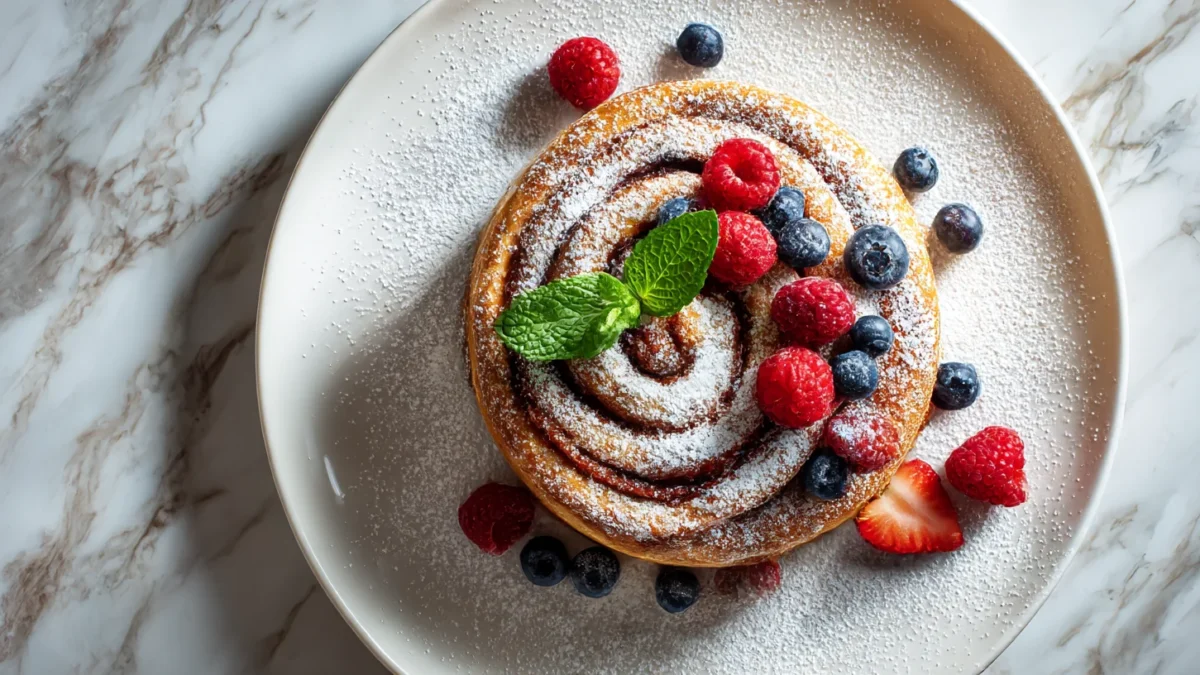
This cinnamon roll cake is exactly what it sounds like: all the warm, gooey, spiced-sugar comfort of a cinnamon roll, baked in layer cake form. A tender buttery cake batter gets ribboned with a cinnamon-sugar swirl that bakes into ribbons of caramelized spice throughout every slice. On top, a cream cheese glaze pools into the cracks and drizzles down the sides. It looks impressive, but the technique is straightforward — layer, sprinkle, swirl, bake. No yeast, no rising time, no rolling or cutting dough. If you can make a box cake, you can make this.
Why You’ll Love This Cinnamon Roll Cake
- All the cinnamon roll flavor without the fuss — no yeast, no proofing, no rolling pin required
- The swirl creates a marbled pattern in every slice that looks like it took real effort
- Cream cheese glaze on top ties it all together with tangy sweetness
- Feeds a crowd — one cake gives you 12 generous servings
- Stays moist for days thanks to the buttermilk in the batter
Ingredients
The cinnamon-sugar swirl filling is the heart of this cake. For the best flavor, use Ceylon cinnamon if you can find it — it is more floral and complex than the standard Saigon cinnamon most grocery stores carry, which tends to be harsher and more pungent. The brown sugar ratio matters too: use dark brown sugar for deeper molasses notes that complement the spice. Light brown sugar works, but the swirl will taste milder and less caramel-like.
- 2 1/2 cups all-purpose flour (spooned and leveled)
- 1 1/2 cups granulated sugar
- 1 cup unsalted butter (2 sticks, softened to room temperature)
- 3 large eggs (room temperature)
- 1 cup buttermilk (room temperature; or substitute 1 cup milk + 1 tablespoon white vinegar, rested 5 minutes)
- 2 teaspoons vanilla extract
- 2 teaspoons baking powder
- 1/2 teaspoon salt
- 3/4 cup dark brown sugar (packed, for the swirl)
- 2 tablespoons ground cinnamon (Ceylon preferred, for the swirl)
- 4 tablespoons unsalted butter (melted, for the swirl)
- 4 oz cream cheese (half a block, softened, for the glaze)
- 1 1/2 cups powdered sugar (sifted, for the glaze)
- 2 to 3 tablespoons whole milk (for the glaze, added gradually)
- 1/2 teaspoon vanilla extract (for the glaze)
Equipment
- Two 9-inch round cake pans (or one 12-cup bundt pan)
- Parchment paper rounds for pan bottoms
- Stand mixer or hand mixer
- Offset spatula (essential for the swirl technique)
- Toothpick or butter knife for swirling
- Wire cooling rack
- For more on choosing the right cake pan for swirl cakes, see Serious Eats’ cake pan guide
How to Make Cinnamon Roll Cake
Step 1 — Prep the pans and oven
Preheat your oven to 350 F. Grease two 9-inch round cake pans with butter, line the bottoms with parchment rounds, then grease the parchment too. (If you skip the parchment, the swirl layer on the bottom will stick and tear when you try to flip the cakes out.) Lightly dust the pans with flour, tapping out the excess. Set aside.
Step 2 — Make the cake batter
In a stand mixer with the paddle attachment, beat the softened butter and granulated sugar on medium-high speed for 3 to 4 minutes until light and fluffy. This step matters — you are incorporating air that helps the cake rise. Add the eggs one at a time, beating after each addition. Scrape down the bowl. Add the vanilla and mix briefly. In a separate bowl, whisk together the flour, baking powder, and salt. Add the dry ingredients to the batter in three additions, alternating with the buttermilk in two additions, beginning and ending with the flour. Mix on low speed after each addition until just combined. Do not overmix. The batter should be thick and smooth.
Step 3 — Make the cinnamon-sugar swirl mixture
In a small bowl, stir together the dark brown sugar and cinnamon until evenly combined. Pour in the melted butter and mix until it forms a thick, sandy paste. It should look like wet brown sugar with no dry pockets. If it seems too dry and crumbly, add another teaspoon of melted butter. This paste is what creates the swirl ribbons inside the cake.
Step 4 — Layer and swirl
Divide half the batter between the two prepared pans, spreading it evenly with an offset spatula. Dollop half the cinnamon-sugar paste over the batter in each pan — about 3 to 4 spoonfuls scattered across the surface. Use the offset spatula to spread it roughly into an even layer, but do not mix it into the batter. Top with the remaining cake batter, spreading it to the edges. Scatter the remaining cinnamon-sugar paste on top. Now drag a toothpick or butter knife through the top layer in a zigzag or figure-eight pattern to create swirl lines. Here is the critical part: three or four passes is enough. Every additional pass blurs the swirl into a muddy brown streak. You want distinct ribbons, not a marble cake.
Step 5 — Bake
Bake at 350 F for 30 to 38 minutes. Start checking at 30 minutes. The cake is done when a toothpick inserted into the center comes out clean or with just a few moist crumbs — no wet batter. The tops should be golden and spring back when lightly pressed. The swirl layer will look darker and slightly caramelized, which is exactly right. If the tops are browning too fast but the centers are not done, tent loosely with foil for the last 5 to 8 minutes.
Step 6 — Cool the layers
Let the cakes cool in their pans on a wire rack for 15 minutes. Run a thin knife around the edges, then invert onto the rack, peel off the parchment, and flip right-side up. Let them cool completely before glazing — at least 45 minutes. If you glaze a warm cake, the glaze will melt off and pool on the plate instead of clinging to the cake.
Step 7 — Make the cream cheese glaze
Beat the softened cream cheese with a hand mixer until smooth, about 1 minute. Add the sifted powdered sugar and 2 tablespoons of milk. Beat on low until combined, then increase to medium for 30 seconds. Add the vanilla. The glaze should be thick but pourable — it should ribbon off a spoon and hold its shape for a second before sinking back in. If it is too thick, add milk a teaspoon at a time. If it is too thin, add more powdered sugar a tablespoon at a time. Pour or drizzle over the top of each cake layer, letting it drip down the sides naturally.
Pro Tips
The easiest way to mess up the swirl is to over-swirl. Resist the urge to keep dragging the toothpick around. Three to four passes creates the most dramatic ribbons. More than six and you get a muddy, indistinct swirl that looks like a mistake.
Test for doneness at the 30-minute mark, not the 35-minute one. This cinnamon roll cake goes from perfectly moist to dry and tight in a surprisingly short window because the sugar in the swirl layer caramelizes and pulls moisture from the surrounding batter.
Glaze timing matters. If the cake is even slightly warm, the glaze turns into a puddle on the plate. If it is fully cold from the fridge, the glaze will not spread easily. Room temperature is the sweet spot — the glaze will flow slowly and set into a smooth, slightly tacky coating.
For the cleanest swirl lines in your cinnamon roll cake, use the paste method (brown sugar + cinnamon + melted butter) rather than just sprinkling dry sugar and cinnamon over the batter. The butter in the paste helps it hold its position during baking instead of dissolving into the batter.
Do not open the oven door during the first 25 minutes of baking. The swirl pattern in this cinnamon roll cake is setting during this time, and the rush of cold air can cause the cake to sink and the swirl to collapse into the center.
Variations & Substitutions
Bundt pan version
Pour one-third of the batter into a greased and floured 12-cup bundt pan. Dollop with one-third of the cinnamon paste. Repeat for two more layers. Swirl with a toothpick. Bake at 350 F for 45 to 55 minutes. Cool in the pan for 20 minutes before inverting. The bundt shape creates a dramatic spiral pattern when sliced. Drizzle the glaze over the top and let it cascade down the ridges.
Caramel drizzle
Make a quick caramel sauce by melting 1/2 cup of granulated sugar in a saucepan over medium heat until amber, then carefully stirring in 1/4 cup of warm heavy cream and a pinch of salt. Let it cool until thick but pourable, then drizzle over the cream cheese glaze. The combination of caramel and cream cheese glaze is unreasonably good.
Apple cinnamon
Fold 1 1/2 cups of peeled, diced Granny Smith apples into the batter before layering. The tart apples cut through the sweetness and add moisture. Increase the bake time by 3 to 5 minutes since the extra fruit adds moisture to the batter. This version tastes like a cinnamon roll and an apple pie had a baby.
Mug cake version
For a single serving, mix 4 tablespoons of flour, 2 tablespoons of sugar, 1/4 teaspoon of baking powder, a pinch of salt, 2 tablespoons of milk, 1 tablespoon of melted butter, and a few drops of vanilla in a microwave-safe mug. Drop a teaspoon of the cinnamon-sugar paste on top, drag a toothpick through it once, and microwave for 90 seconds. Top with a spoonful of cream cheese glaze. It is not as pretty as the full cake, but it satisfies the craving in under 3 minutes.
Storage & Reheating
Cover the glazed cake with a cake dome or invert a large bowl over it and store at room temperature for up to 2 days. The glaze will set and form a slight crust but the cake underneath stays moist. For longer storage, refrigerate for up to 5 days — the cold firms up the glaze and makes the cake denser and fudgier, which some people actually prefer. Let refrigerated slices sit at room temperature for 15 minutes before serving for the best texture.
To freeze, wrap individual slices or the whole (unglazed) cake tightly in plastic wrap, then foil, and freeze for up to 3 months. Thaw at room temperature for 2 to 3 hours. Make and apply the glaze after thawing — frozen and thawed glaze weeps and turns grainy.
What to Serve With Cinnamon Roll Cake
A scoop of vanilla bean ice cream alongside a warm slice
A drizzle of salted caramel sauce over the glaze transforms this cinnamon roll cake into something truly over-the-top
A hot cup of coffee — the bitterness cuts through the sweetness perfectly
Pair with these homemade cinnamon rolls for the ultimate cinnamon-themed brunch
Serve after a hearty dinner alongside apple crisp for a fall dessert spread
For more cake recipes, try this banana cake with brown butter frosting
A glass of cold milk — classic, and it works
Nutrition Information
Per serving (1/12 of cake, with glaze):
Frequently Asked Questions
Can I use a different pan — like a 9×13 sheet pan or a springform?
A 9×13 inch sheet pan works. The cake will be thinner, so reduce the bake time to 22 to 26 minutes. A 10-inch springform pan also works well and makes it easier to release the cake — bake for 35 to 40 minutes. Avoid tube pans with a removable bottom unless you wrap the outside in foil; the swirl paste can leak through the seam and make a mess in your oven.
What cinnamon works best for this cinnamon roll cake?
Store-bought cinnamon is fine. Most grocery store cinnamon is Saigon cassia, which has a stronger, more pungent flavor. It will work perfectly well in this recipe. If you can get Ceylon cinnamon (sometimes labeled ‘true cinnamon’), use it — it is more nuanced and floral, and it lets the brown sugar flavor come through more clearly. Either way, make sure your cinnamon is fresh. If it has been in the back of your spice cabinet for two years, replace it. Old cinnamon tastes like dust.
Why did my swirl sink to the bottom instead of staying in the middle?
This happens when the swirl mixture is too heavy or the batter is too thin. Make sure you are using the paste method (brown sugar + cinnamon + melted butter) rather than sprinkling dry sugar over the batter. The butter binds the mixture so it stays suspended. Also, do not add the swirl paste to the very bottom layer — always put batter down first, then the paste, then more batter on top. The batter below acts as a cushion that supports the swirl.
Can I make this cake ahead of time?
Yes, and it is actually a great make-ahead cake. Bake and cool the layers, then wrap them tightly in plastic wrap and store at room temperature overnight or refrigerate for up to 2 days. Apply the glaze the day you plan to serve it. The flavors meld overnight and the cake becomes more moist and cohesive. You can also freeze the unglazed layers for up to 3 months.
Can I substitute the cream cheese glaze with something else?
Absolutely. A simple vanilla glaze made with 1 cup powdered sugar, 2 tablespoons of milk, and 1/2 teaspoon of vanilla extract is the easiest swap. For a richer option, try a brown butter glaze: brown 3 tablespoons of butter, let it cool slightly, then whisk it into 1 cup of powdered sugar with 2 tablespoons of cream. A maple glaze (maple syrup instead of milk in the vanilla glaze) also pairs beautifully with the cinnamon.
Cinnamon roll cake is the kind of recipe that makes people think you spent hours in the kitchen. The swirl looks intricate, the glaze looks professional, but the whole thing comes together in about 20 minutes of active work. It is the cake you make when you want something that feels special without the stress of a from-scratch cinnamon roll dough. Bake it for a weekend bring it to a potluck, or just make it because it is Tuesday and you deserve cake.