Classic Caesar Salad
Authentic classic Caesar salad with homemade dressing, crisp romaine, and Parmesan. Ready in 20 minutes.
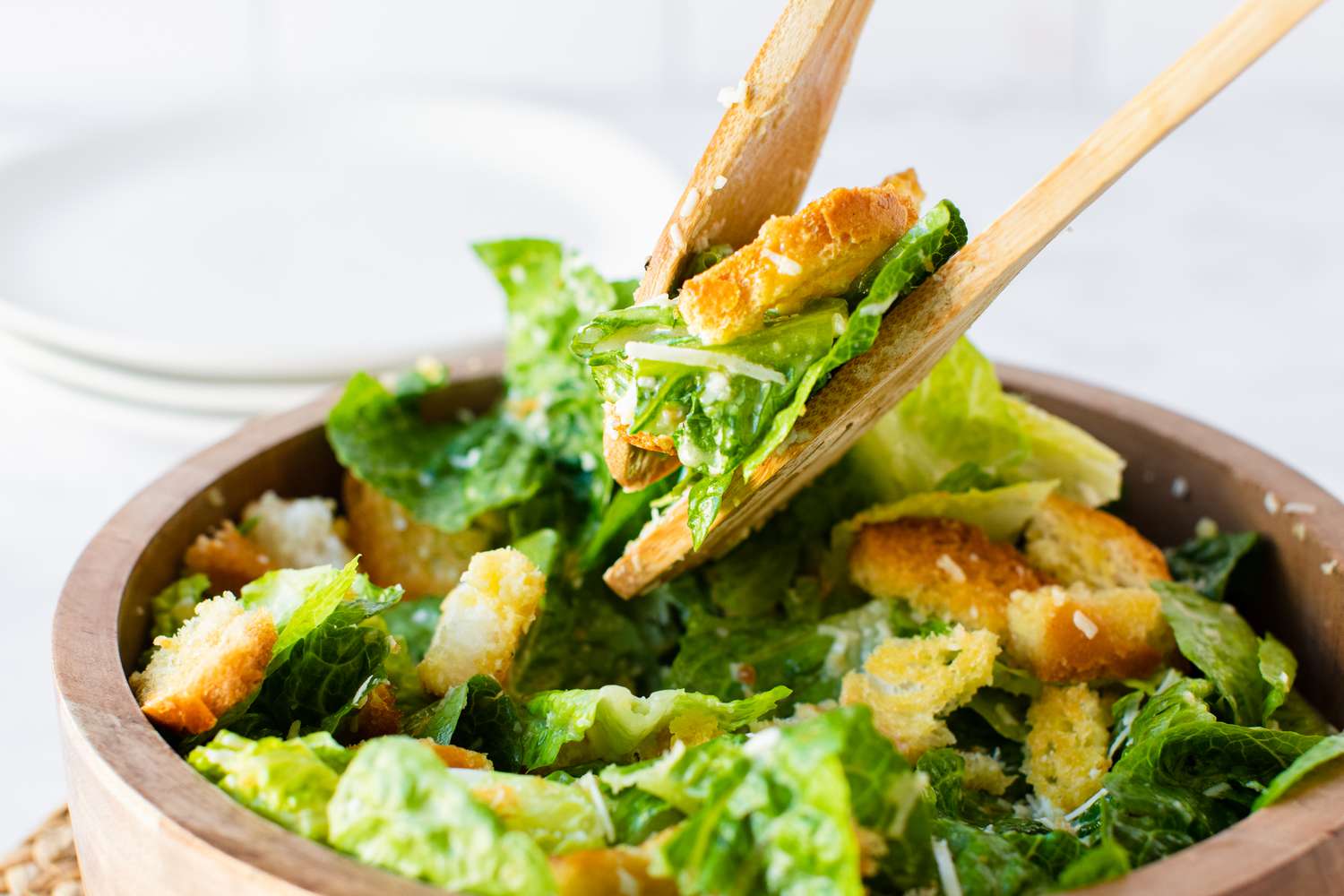
Why You’ll Love This Classic Caesar Salad
This isn’t a bottled-dressing kind of salad. Here’s why this version works:
- Authentic flavor profile — anchovy, garlic, and egg yolk create the emulsion that defines a true Caesar.
- Ready in 20 minutes — from start to plating in under half an hour.
- Make-ahead friendly — dressing keeps in the fridge for up to 3 days; just rewisk before serving.
- Forgiving dressing — even if your emulsion breaks, a teaspoon of warm water whisks it right back together.
- Customizable — add grilled chicken, shrimp, or keep it vegetarian; the dressing complements everything.
Ingredients
The soul of a classic Caesar salad is the dressing — specifically the anchovy fillets. Buy quality oil-packed anchovies (usually in small tins near the Italian products). They should be purple-black and firm, not gray and mushy. If you can only find salt-packed, rinse them for 30 seconds before using.
- 3 romaine hearts (about 6 cups chopped) — look for crisp, dark green leaves without brown edges
- 1 cup (60g) freshly grated Parmesan cheese — pre-grated won’t melt into the dressing properly
- 1½ cups (70g) homemade croutons — see equipment section for recipe
- 6 anchovy fillets, minced fine — the backbone of the dressing’s umami
- 2 large egg yolks (room temperature) — the emulsifier; pasteurized eggs are safe if you’re concerned
- 3 tablespoons fresh lemon juice (about 1 large lemon) — bottled juice lacks the brightness
- 1 tablespoon Dijon mustard — helps stabilize the emulsion
- 2 cloves garlic, minced into a paste — use a microplane or mortar and pestle
- ½ cup (120ml) extra virgin olive oil — fruity, not peppery; this is 50% of the dressing
- 2 tablespoons Worcestershire sauce — adds depth and complexity
- 1 teaspoon black pepper, freshly cracked — pre-ground tastes flat
- ¼ teaspoon sea salt — adjust after tasting; anchovies and Parmesan add saltiness
A note on the eggs
Traditional Caesar dressing uses raw egg yolks. If you’re serving immune-compromised guests or are concerned about Salmonella, use pasteurized eggs (available in most supermarkets) or substitute 2 tablespoons of mayonnaise for a similar richness without the raw egg risk.
Equipment You’ll Need
- Salad spinner — wet lettuce dilutes the dressing; spin until bone-dry.
- Whisk — a balloon whisk incorporates air and helps the emulsion form faster.
- Mortar and pestle or microplane — for turning garlic into a smooth paste.
- Large wooden salad bowl — wooden bowls absorb the garlic and anchovy oils over time, seasoning the bowl.
- Chef’s knife and cutting board — for chopping romaine into bite-sized pieces.
- Small skillet — for making quick croutons if you don’t have day-old bread.
How to Make Classic Caesar Salad
Step 1 — Prep the romaine (5 minutes)
Separate the romaine leaves and chop them into bite-sized pieces (about 1½ inches). Wash in cold water and spin dry in a salad spinner — this step is critical. Any residual water will repel the oily dressing and leave you with a watery, poorly coated salad. If you don’t have a spinner, pat the leaves dry with clean kitchen towels. Place the dried lettuce in your largest salad bowl.
Failure mode: If your lettuce is still wet after spinning, spread it on a clean kitchen towel for 5 minutes. The towel will wick away the moisture.
Step 2 — Make the croutons (8 minutes)
Cut day-old bread (ciabatta or baguette works best) into ¾-inch cubes — you’ll need about 2 cups. Heat 2 tablespoons of olive oil in a skillet over medium heat. Add the bread cubes and toss constantly for 6-8 minutes until golden brown on all sides. Season with a pinch of salt and garlic powder. If you’re short on time, store-bought croutons work, but homemade have a texture that’s worth the extra 8 minutes.
Step 3 — Build the dressing base (3 minutes)
In a small bowl, whisk together the egg yolks, minced garlic (which you’ve turned into a paste with a pinch of salt), Dijon mustard, Worcestershire sauce, lemon juice, and minced anchovies. Whisk vigorously for 30 seconds until the mixture lightens in color. This step dissolves the anchovies into the base so you don’t get fishy chunks in the finished dressing.
Step 4 — Emulsify the dressing (2 minutes)
While whisking constantly, drizzle in the olive oil one tablespoon at a time. The mixture should thicken and turn pale yellow — this is your emulsion forming. If it looks curdled, stop adding oil and whisk in 1 teaspoon of warm water; it should come back together. Once all the oil is incorporated, season with black pepper and salt. Taste — it should be punchy with acid, salty from the anchovies, and rich from the oil and egg.
Failure mode: If the dressing breaks completely (looks like soup with oil floating on top), start over with a fresh egg yolk in a clean bowl. Whisk the broken dressing into the new yolk one teaspoon at a time — it’ll rescue the batch.
Step 5 — Assemble the salad (2 minutes)
Pour half the dressing over the romaine and toss with your hands or salad tongs. The heat from your hands actually helps the dressing coat the leaves evenly. Add half the Parmesan and half the croutons, toss again. Taste a leaf — the lettuce should be evenly coated but not swimming in dressing. Add more dressing if needed (you’ll likely have extra; it keeps for 3 days). Top with remaining Parmesan and croutons. Serve immediately.
Pro Tips for Best Results
Dry the lettuce completely. This is the single most overlooked step. Water repels oil, so any moisture on your romaine will prevent the dressing from clinging to the leaves.
Use room temperature egg yolks. Cold yolks don’t emulsify as readily. Take them out of the fridge 20 minutes before starting, or place them in a bowl of warm water for 2 minutes.
Don’t skip the anchovies. Even if you think you don’t like them, they provide the savory depth that defines Caesar dressing. Minced fine and whisked into the base, they dissolve completely — you’ll taste the umami, not the fish.
Whisk the dressing by hand. A food processor makes the dressing too thin. The manual whisking incorporates just enough air to give the dressing body and helps you feel when the emulsion is ready.
Season the croutons while hot. Toss them with salt, garlic powder, or dried herbs immediately after frying while the oil is still wet — the seasoning sticks better this way.
Variations & Substitutions
Grilled chicken Caesar
Add 2 grilled chicken breasts (sliced) for a full meal. Season the chicken with salt, pepper, and garlic powder, grill 6 minutes per side until 165°F internal temp. Let rest 5 minutes before slicing against the grain.
Vegetarian version
Omit the anchovies and Worcestershire sauce (which contains anchovies). Replace with 1 teaspoon of white miso paste and ½ teaspoon of soy sauce. The umami is slightly different but equally satisfying.
Kale Caesar
Replace half the romaine with Lacinato kale (stemmed and thinly sliced). Massage the kale with 1 teaspoon of olive oil and a pinch of salt for 2 minutes before adding to the bowl — this breaks down the tough fibers and makes it tender.
Spicy Caesar
Add ½ teaspoon of red pepper flakes to the dressing base, or mix 1 tablespoon of Calabrian chili paste into the finished dressing for a spicy, fruity kick that cuts through the richness.
Storage, Make-Ahead & Reheating
Dressing storage: Transfer leftover dressing to an airtight jar and refrigerate for up to 3 days. The olive oil will solidify — let it sit at room temperature for 10 minutes and whisk vigorously before using. If it’s too thick, thin with 1 teaspoon of warm water.
Assembled salad: Don’t store dressed salad; the lettuce wilts within 30 minutes. If you have leftovers, store the undressed lettuce, croutons (in a paper bag), and dressing separately. Assembled salad is best eaten immediately.
Croutons: Store in an airtight container at room temperature for up to 3 days. Refresh in a 350°F oven for 5 minutes if they’ve gone soft.
Make-ahead strategy: Make the dressing and croutons up to 3 days ahead. Wash and dry the lettuce up to 1 day ahead — store in the spinner (unwashed) or wrapped in damp paper towels in the fridge.
What to Serve With Classic Caesar Salad
This salad plays well with both light and hearty mains. For a steakhouse experience, pair it with our creamy garlic Tuscan chicken — the rich chicken and crisp, tangy salad balance each other perfectly. For a lighter meal, serve alongside our lemon herb grilled salmon, where the salmon’s richness is cut by the salad’s acidity. If you’re building a dinner party menu, add our garlic bread with herbs for a carb element that soaks up any extra dressing on the plate.
Nutrition Information
Per serving (serves 4, about 2 cups each): approximately 320 calories, 12g protein, 14g carbohydrates, 26g fat, 3g fiber, 3g sugar. The dressing accounts for most of the fat and calories — using less dressing or substituting half the oil with Greek yogurt can lighten it significantly while maintaining creaminess.
Frequently Asked Questions
Can I make Caesar dressing without raw eggs?
Yes — substitute 2 tablespoons of mayonnaise or Greek yogurt for the egg yolks. The texture will be slightly different (thicker and less silky), but the flavor profile remains close. Mayo-based dressings also hold longer in the fridge (up to 5 days).
Is Caesar salad safe for pregnant women?
The traditional recipe uses raw egg yolks, which carry a small risk of Salmonella. Pregnant women should use pasteurized eggs or the mayonnaise substitution mentioned above. Also confirm the anchovies are from a reputable brand and the Parmesan is made with pasteurized milk.
Why does my dressing taste too fishy?
You likely used too many anchovies or didn’t mince them fine enough. Start with 4 fillets and mince them into a paste with the back of a knife before adding to the bowl. If it’s already too fishy, whisk in another tablespoon of lemon juice and a pinch of sugar to balance the flavors.
Can I use bottled Caesar dressing?
You can, but you’ll miss the bright, punchy flavor of fresh. Bottled dressings use stabilizers and preservatives that dull the taste. If you must use bottled, add a squeeze of fresh lemon juice and an extra grind of black pepper to brighten it up.
How do I keep the croutons crunchy in the salad?
Add the croutons at the very last moment, right before serving. If you’re plating individually, place the dressed salad on the plate first, then top with croutons so they stay crisp longer. For buffet-style serving, keep croutons in a separate bowl and let guests add their own.
Can I make this vegan?
Yes — replace the egg yolks with 2 tablespoons of vegan mayo or silken tofu (blended smooth), omit the Parmesan (or use nutritional yeast + cashew cream), and skip the anchovies (use miso paste as described in the vegetarian variation). The result is surprisingly close to the original.
Final Thoughts
Classic Caesar salad is one of those recipes that proves simple ingredients, when combined with the right technique, create something far greater than the sum of their parts. The emulsion of egg, oil, acid, and umami is culinary chemistry at its most delicious. Next time, try adding a soft-boiled egg on top for extra richness, or swap the romaine for a mix of kale and spinach for a nutritional boost. Save this recipe — it’s the one that will make you stop buying bottled dressing forever.
1 Comment