Smoked Pulled Pork Sliders
Tender smoked pulled pork sliders with tangy BBQ sauce — the ultimate 4th of July crowd-pleaser. Slow-smoked then piled high on soft rolls. Get the recipe.
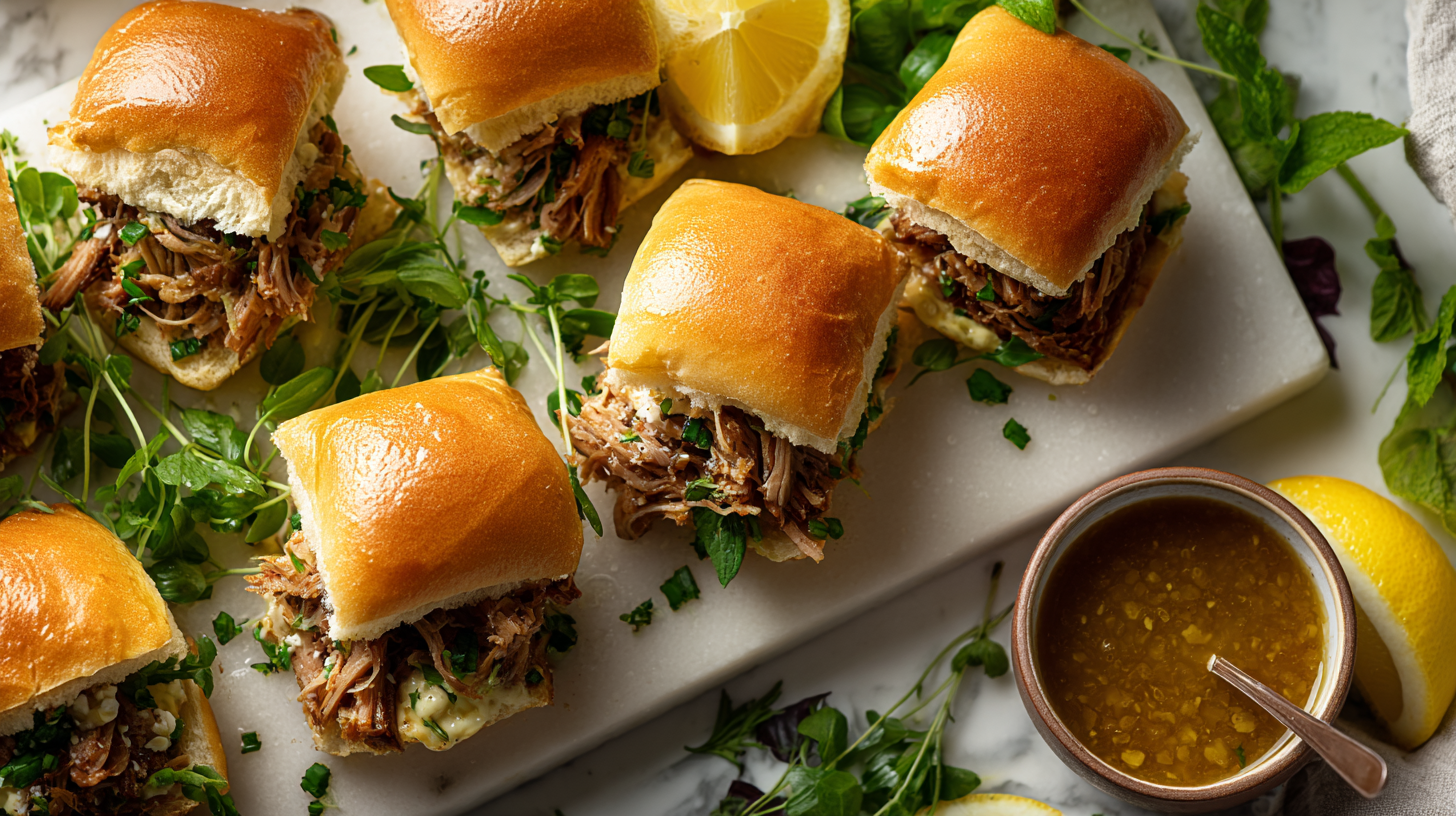
Smoked pulled pork sliders are the kind of recipe that disappears before you even sit down at the table. Tender, slow-smoked pork shoulder gets shredded and piled onto soft slider buns with a tangy BBQ sauce that cuts through the richness. This recipe takes a little patience — about 6 hours on the smoker — but the hands-off cooking and incredible payoff make it the centerpiece of any Independence Day cookout.
Why You’ll Love This Smoked Pulled Pork Sliders
- Feeds a crowd — one 8-pound shoulder yields about 30 sliders, enough for 15 hungry guests.
- Mostly hands-off — once it is on the smoker, you only need to spritz it once an hour.
- Make-ahead friendly — smoke the pork the day before and reheat in sauce the morning of your gathering.
- Restaurant-quality bark — the rub creates a crisp, caramelized crust that holds up even after shredding.
- Customizable heat — keep the sauce mild for kids or add cayenne for a bolder kick.
Ingredients
- 8 lb bone-in pork shoulder (butt) (bone-in adds flavor and moisture during the long cook)
- 1/4 cup yellow mustard (acts as a binder for the rub; you will not taste it in the final product)
- 3 tbsp brown sugar (dark brown sugar for a deeper molasses note)
- 2 tbsp smoked paprika (use Spanish pimenton if available)
- 2 tbsp kosher salt (Diamond Crystal; use 1 tbsp if using Morton's)
- 1 tbsp black pepper (freshly ground)
- 1 tbsp garlic powder
- 1 tbsp onion powder
- 1 tsp cayenne pepper (reduce to 1/4 tsp for a milder rub)
- 1/2 cup apple cider vinegar (for the spritz — balances the pork's richness)
- 1/2 cup apple juice (mixed with vinegar for spritzing)
- 2 cups BBQ sauce (use your favorite store-bought or homemade)
- 30 rolls sweet Hawaiian rolls or classic slider buns (King's Hawaiian works well)
- as needed dill pickle chips (for topping)
- 2 tbsp unsalted butter (for toasting the buns)
Equipment
- Charcoal or wood-burning smoker (a Weber kettle set up for indirect heat works in a pinch)
- Wire rack set inside a rimmed baking sheet (for resting)
- Spray bottle for the spritz
- Two pairs of heavy-duty tongs — one for handling the shoulder, one for managing coals
- Meat thermometer or probe thermometer
- Aluminum foil or butcher paper (for wrapping during the stall)
- Large heat-resistant cutting board and two forks (for pulling)
How to Make Smoked Pulled Pork Sliders
Step 1 — Prep and rub the pork (20 minutes)
Pat the pork shoulder dry with paper towels — a dry surface is essential for the rub to stick. Slather the entire surface with yellow mustard; this creates a tacky layer without adding a mustard flavor. Whisk together the brown sugar, smoked paprika, salt, pepper, garlic powder, onion powder, and cayenne in a bowl. Apply the rub generously on all sides, pressing it into the meat. Let the shoulder sit at room temperature for 45 minutes while you get the smoker going. If pieces of rub fall off, press them back on.
Step 2 — Set up the smoker and get to temperature (30 minutes)
Fill your smoker and bring it to a steady 225°F to 250°F. Use a mix of charcoal and hardwood chunks — hickory, cherry, or applewood all pair well with pork. Cherry wood will give the meat a beautiful reddish hue. Set up for indirect heat if using a kettle grill, with a drip pan of water beneath where the pork will sit. The water pan keeps the cooking environment moist and catches drippings so they do not flare up.
Step 3 — Smoke the pork shoulder (4 to 5 hours)
Place the pork shoulder fat-cap up on the grate and close the lid. Maintain 225°F to 250°F — resist the urge to open the lid every few minutes, as each peek costs you 10 minutes of cooking time. After the first hour, begin spritzing with the apple cider vinegar and apple juice mixture every 45 to 60 minutes. The smoke will form a dark crust, called bark, over the first 3 to 4 hours. When the internal temperature hits 160°F to 165°F, the pork will enter “the stall” — the temperature plateaus as moisture evaporates. This is normal. Do not increase the heat.
Step 4 — Wrap and push through the stall (1 to 2 hours)
Once the pork hits 165°F internally, tightly wrap it in butcher paper or aluminum foil. This traps steam and pushes the meat through the stall faster. Return it to the smoker and continue cooking until the internal temperature reaches 200°F to 205°F. At this point, the collagen has fully broken down and the shoulder will feel soft when pressed — almost like pushing on a memory foil insert. If the probe slides in with almost no resistance, it is done.
Step 5 — Rest the meat (45 minutes)
Pull the wrapped shoulder off the smoker, set it on a cutting board or sheet pan, and let it rest for at least 45 minutes. Do not skip this step. The internal temperature will drop about 10 degrees, but the juices will redistribute throughout the meat. During the stall period, a lot of moisture moved toward the surface — resting lets it soak back in so every shred is juicy and tender.
Step 6 — Pull, sauce, and build the sliders (15 minutes)
Unwrap the pork and discard any hard pieces of fat or bone. Using two forks (or your hands if you are wearing gloves and the meat has cooled enough), shred the pork into bite-sized pieces. Toss the pulled pork with about a cup of BBQ sauce — enough to coat everything without making it soupy. Meanwhile, split the slider buns and toast them cut-side down in a buttered skillet for 90 seconds until they are golden. Pile a generous heap of pork on each bottom half, add a couple of pickle chips, and cap with the top bun.
Pro Tips
Use bone-in pork shoulder, not a boneless roast. The bone conducts heat into the center of the meat and adds gelatin to the drippings, which keeps the pulled pork moist even after sitting on a buffet table for an hour.
Do not trim the fat cap. It renders slowly during the cook and bastes the meat from the top down. Trim it after pulling if you prefer a leaner bite.
Spritz, do not mop. A light spray of vinegar and juice adds moisture without washing off the rub. A heavy mop would strip the bark you spent hours building.
Hold the pork in a cooler. If your guests are not ready when the pork is done, wrap the rested shoulder in a towel and place it in an empty cooler. It will stay above 140°F for up to 3 hours — plenty of time to set up the rest of the spread.
Save the drippings. Pour any liquid from the resting pan into a fat separator. The defatted pork jus is incredible drizzled over the sliders or mixed into the BBQ sauce.
Variations & Substitutions
Carolina vinegar sauce
Skip the sweet BBQ sauce and toss the pulled pepper with a thin, tangy vinegar sauce: 1 cup apple cider vinegar, 1 tbsp brown sugar, 1 tsp red pepper flakes, 1 tsp salt, and 1/2 tsp black pepper. Heat until the sugar dissolves, then pour over the pork. This is the classic Eastern North Carolina style.
Instant Pot shortcut
If you do not have a smoker, cut the pork into 3-inch chunks, coat with the rub, and pressure cook on high for 90 minutes with 1 cup of broth. Natural release for 15 minutes, then shred and toss with sauce. Spread on a sheet pan and broil for 5 minutes to get a caramelized edge. It will not have the smoke flavor, but the texture is surprisingly close.
Spicy chipotle version
Add 2 minced chipotle peppers in adobo sauce to the BBQ sauce and stir in 1 tbsp of the adobo liquid. The smoky heat from the chipotles complements the pork beautifully.
Storage & Reheating
Refrigerator: Store pulled pork (without buns) in an airtight container for up to 4 days. The flavor actually improves overnight as the sauce soaks into the meat.
Freezer: Freeze in zip-top bags with the air pressed out for up to 3 months. Thaw overnight in the refrigerator.
Reheating: Warm the pork in a saucepan over low heat with a splash of apple juice or broth to loosen it. Cover and stir occasionally until heated through, about 8 minutes. Avoid the microwave — it heats unevenly and can make the edges rubbery.
What to Serve With Smoked Pulled Pork Sliders
These sliders are the star of any Independence Day spread, but they need a few supporting players. A big batch of spicy fried rice makes an unexpected but crowd-pleasing side that holds up well outdoors. For something lighter, our classic Caesar salad brings a crisp, acidic contrast to the rich, smoky pork. The USDA safe temperature chart is an essential reference for smoking meat to safe internal temperatures. And if you are feeding a serious crowd, round things out with broccoli burrata pasta salad — it can be made hours ahead and travels well to a picnic table.
Nutrition Information
Per slider (pork and bun, sauce included): approximately 280 calories, 18 g protein, 22 g carbohydrates, 12 g fat, 1 g fiber. Values are estimates and will vary depending on the specific BBQ sauce and bun brand you use.
Frequently Asked Questions
Can I make pulled pork sliders ahead of a party?
Absolutely. Smoke and pull the pork the day before, then store it in the refrigerator with the BBQ sauce mixed in. Reheat in a 300°F oven, covered with foil, for 20 minutes. The pork actually tastes better the next day because the flavors have had time to meld.
What if I do not own a smoker?
Set up your charcoal grill for indirect heat using the minion method — bank coals on one side and place the pork on the other. Add a few soaked wood chunks to the coals for smoke. You will need to add fresh coals every 90 minutes. A gas grill on low with a smoker box works too, though the bark will not be as pronounced.
How do I know when the pork is done if I do not have a thermometer?
Invest in a probe thermometer — it is the single most useful tool for smoked meats. Without one, you can test by pressing a fork into the thickest part of the shoulder. If it twists easily and the meat falls apart, it is ready. If there is still resistance, give it another 30 minutes.
What is the best wood for smoking pork?
Fruit woods like apple and cherry are the classic choices for pork — they add a mild, slightly sweet smoke that does not overpower the meat. Hickory works too but use it sparingly because it can turn bitter over a long cook. Avoid mesquite; it is too aggressive for a 6-hour smoke.
Can I use a different cut of pork?
Pork shoulder (also called pork butt) is the gold standard because of its high fat and collagen content, which breaks down into gelatin during the long cook. A pork loin roast will dry out at these temperatures and times. Stick with the shoulder.
These smoked pulled pork sliders are the recipe your guests will talk about long after the fireworks are over. They take time, but every minute of that low-and-slow cook is worth it when you pull apart a bun and see the steam rise off that saucy, tender pork. Make a double batch — they disappear fast. Save this post so you have it ready for the next cookout.