Smoked BBQ Ribs with Bourbon Glaze
Fall-off-the-bone smoked BBQ ribs with a bourbon glaze — slow-smoked low and slow, then brushed with a sweet and spicy glaze. Get the recipe.
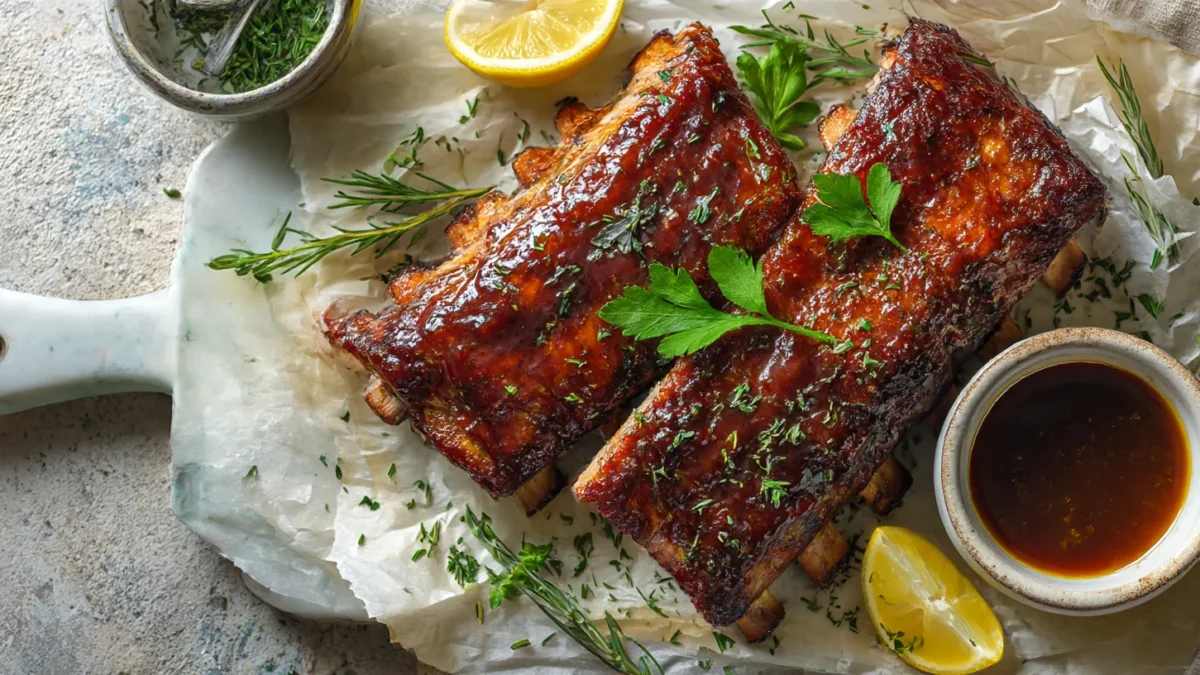
There’s nothing quite like pulling a rack of **smoked BBQ ribs** off the heat and watching that bark crackle under a sticky bourbon glaze. This recipe walks through everything from trimming the ribs and building a solid rub to banking the smoke so they come out tender, deeply flavored, and ready for your best cookout spread of the summer. You don’t need a fancy rig, just a steady low temperature, a couple hours of patience, and some quality pork. Whether this is your first time making smoked BBQ ribs at home or you’re dialing in your method after a few cooks, this guide has you covered from start to finish.
Why You’ll Love This Smoked Bbq Ribs
- Fall-off-the-bone tender without being mushy. The low-and-slow method breaks down collagen properly, so these smoked BBQ ribs pull clean from the bone but still have a satisfying bite.
- Deep, complex smoke flavor. Hardwood smoke penetrates the meat over hours, building layers of flavor that make well-made smoked BBQ ribs so addictive. A quick grill session simply cannot replicate it.
- That bourbon glaze is legit. Brown sugar, bourbon, and cider vinegar caramelize into a glossy, tangy-sweet coating that clings to every rib.
- It’s mostly hands-off. Once the ribs are on the smoker, your job is to manage temperature and wait. Perfect for a Saturday afternoon.
- Feeds a crowd for cheap. A full rack of spare ribs per person is one of the most cost-effective ways to serve meat to a group.
- Weekend-ready with make-ahead flexibility. You can smoke the ribs and glaze them up to a day ahead, then reheat and serve when guests arrive.
Ingredients
Spare ribs are the backbone of any serious smoked BBQ ribs session. Look for racks with even marbling across the meat and a thin, uniform membrane on the bone side that you'll want to remove before cooking. Baby back ribs also work here but cook faster and have less fat, so spare ribs (sometimes called St. Louis-cut) give you a richer result with better smoke absorption during the long cook.
- 2 full racks St. Louis-cut spare ribs (about 3 lbs each) (Remove the membrane from the bone side before seasoning)
- 1/4 cup coarse kosher salt
- 1/4 cup coarsely ground black pepper (Use a 50/50 mix with salt for a classic BBQ rub base)
- 2 tablespoons paprika (Smoked paprika adds depth)
- 1 tablespoon garlic powder
- 1 tablespoon onion powder
- 1 teaspoon cayenne pepper (Reduce to 1/2 teaspoon if you prefer mild heat)
- 1/4 cup yellow mustard (Used as a binder for the rub; flavor cooks off)
- 2 cups wood chips or chunks (hickory, oak, or apple) (Soak chips in water for 30 minutes if using a charcoal setup)
- 1 cup bourbon (Something drinkable but not top-shelf; Jim Beam or Bulleit works great)
- 1 cup ketchup
- 1/2 cup packed dark brown sugar
- 1/4 cup apple cider vinegar
- 2 tablespoons Worcestershire sauce
- 1 tablespoon Dijon mustard
- 1 teaspoon smoked paprika
- 1/2 teaspoon cayenne pepper
- 2 bay leaves (Remove before serving)
Equipment
- Offset smoker, kamado grill, or bullet-style smoker (anything that holds 225-250°F consistently)
- Charcoal and wood chunks if using a charcoal-based setup
- Aluminum drip pan
- Instant-read meat thermometer (maple probe or Thermapen recommended)
- Spray bottle filled with 50/50 apple cider vinegar and water
- Heavy-duty aluminum foil
- Basting brush (silicone works best)
- Sharp boning knife or ribs for trimming
- Paper towels for gripping the membrane
- Heat-resistant gloves
How to Make Smoked Bbq Ribs
Step 1 — Trim and prep the ribs (20 minutes)
Flip each rack bone-side up. Slide a butter knife under the thin membrane at one end to loosen it, grip it with a paper towel, and peel it off in one piece. Trim any loose flaps of meat or excess fat. For the best smoked BBQ ribs, you want a clean surface so the rub sticks and smoke penetrates evenly. Coat both sides lightly with yellow mustard as a binder, then season generously with your rub mixture on all sides. Let the seasoned ribs sit at room temperature for 30 minutes while you fire up the smoker. Failure mode: If you skip removing the membrane, smoke and seasoning won’t reach the meat and the membrane turns chewy during the long cook.
Step 2 — Fire the smoker and stabilize temperature (30 minutes)
Get your smoker to a steady 225-235°F. For offset smokers, use a two-zone setup with the firebox on one end and a drip pan of water on the cooking grate. Add hardwood chunks (hickory or oak for a classic smoke flavor, apple or cherry for something sweeter) directly on the coals. Close the lid and wait until the smoker holds temperature for at least 10 minutes before loading the ribs. Failure mode: If your temperature swings above 275°F, the fat won’t render properly and the meat gets tough. Crack a vent to lower the temp rather than opening the lid, which drops heat and extends cook time.
Step 3 — Smoke the ribs, unwrapped (3 hours)
Place the ribs bone-side down directly on the grate. Close the lid and don’t touch them for the first 90 minutes. After that, spritz with apple cider vinegar every 45 minutes to keep the surface moist and help build bark. Add wood chunks or chips as needed for thin blue smoke. Thick white smoke means incomplete combustion and will make the ribs taste bitter. Failure mode: Opening the lid too often causes temperature swings and adds 10-15 minutes per opening. Resist the urge to peek. Trust the thermometer.
Step 4 — Wrap and tenderize (2 hours)
After 3 hours of smoke, lay out two sheets of heavy-duty foil per rack. Place each rack meat-side down on the foil, add a splash of apple juice or bourbon, and wrap tightly. Return to the smoker at 225°F for 2 hours. This braising step is what separates dry, chewy ribs from the kind of smoked BBQ ribs that fall apart at the touch of a fork. The collagen and connective tissue melt away during this phase. Failure mode: If the foil has gaps, steam escapes and the ribs dry out. Double-wrap if you’re unsure. Check that the internal temperature reaches at least 190°F.
Step 5 — Make the bourbon glaze (15 minutes, during the wrap)
Combine bourbon, ketchup, brown sugar, apple cider vinegar, Worcestershire, Dijon, smoked paprika, cayenne, and bay leaves in a medium saucepan over medium heat. Bring to a simmer and cook for 10-12 minutes, stirring occasionally, until the sauce thickens enough to coat the back of a spoon. Remove bay leaves. The alcohol cooks off but leaves behind a warm, oaky depth that makes these smoked BBQ ribs stand out. Failure mode: If you add the glaze too early in the cook, the sugar burns. This glaze goes on in the final 30 minutes only.
Step 6 — Glaze and finish on the smoker (30-45 minutes)
Unwrap the ribs carefully (steam will be hot) and place them back on the smoker grate bone-side down. Brush a generous layer of bourbon glaze on the meat side. Close the lid and cook for 15 minutes. Repeat with another coat of glaze and cook another 15 minutes. The glaze should be tacky and caramelized, forming a sticky shell over the bark that makes these smoked BBQ ribs impossible to stop eating. Pull the ribs when the internal temperature reads 195-203°F and a toothpick slides into the meat between the bones with almost no resistance. Failure mode: If the glaze starts to blacken, your smoker is too hot or the ribs are too close to the heat source. Move them to the cool side and reduce the temp.
Step 7 — Rest and serve (10 minutes)
Transfer the ribs to a cutting board and tent loosely with foil. Let them rest for 10 minutes so the juices redistribute. Cut between the bones with a sharp knife. These smoked BBQ ribs deserve a proper rest. Serve with extra glaze on the side. Failure mode: Cutting immediately causes all the moisture to run out onto the board. Ten minutes of patience makes the difference between juicy ribs and dry ones.
Pro Tips
Spritz, don’t mop. A light spray of apple cider vinegar every 45 minutes during the unwrapped phase keeps the surface moist without washing away the rub. A soaked rag mop can strip bark that took hours to build.
Use the bend test. Pick up one end of the rack with tongs. If the rack bends easily and the surface cracks slightly, the collagen has broken down and the ribs are done. This is more reliable than temperature alone.
Keep a log. Write down your smoker settings, wood type, ambient temperature, and cook time each session. Smoking is part science, part feel, and a logbook helps you repeat your best results.
Don’t rush the smoke. The first 2-3 hours are when the meat absorbs the most smoke flavor, and this is where great smoked BBQ ribs earn their name. After wrapping, the smoke window is essentially closed. Make those early hours count with clean, thin blue smoke.
Save the bone trimmings. Any rib tips or trimmed bones go into a pot with onion, celery, and bay leaf for a killer stock. Simmer for 3 hours, strain, and use it for beans or soup. This is one more reason these smoked BBQ ribs give you more value per cook.
Variations & Substitutions
Spicy Chipotle Bourbon Ribs
Add 2 minced chipotle peppers in adobo sauce and 1 tablespoon of the adobo liquid to the glaze. Increase the cayenne to a full teaspoon. The smoky heat from the chipotles plays off the bourbon’s sweetness and gives the ribs a slow-building kick that lingers.
Beef Short Ribs with Bourbon Glaze
Swap pork spare ribs for 4-5 lbs of bone-in beef short ribs. Increase the cook time by 1-2 hours during the wrapped phase, targeting an internal temp of 203-205°F. The glaze works beautifully on beef, and the extra marbling in short ribs means an even richer result. If you love the deep smoke flavor of traditional smoked BBQ ribs, beef short ribs deliver that same intensity with a beefier backbone.
Honey-Mustard Glaze Swap
Replace the bourbon glaze with a honey-mustard version: 1/2 cup Dijon mustard, 1/3 cup honey, 2 tablespoons brown sugar, 1 tablespoon apple cider vinegar, and a pinch of cayenne. Simmer for 8 minutes. This gives a tangy, slightly sweet profile that pairs well with applewood smoke.
Storage & Reheating
Refrigerator: Wrap leftover ribs tightly in foil or store in an airtight container for up to 4 days. The glaze holds up well and actually deepens in flavor overnight.
Freezer: Place cooled ribs in a single layer on a parchment-lined sheet pan and freeze until solid, then transfer to a zip-top bag with as much air removed as possible. They’ll keep for up to 3 months. Thaw overnight in the fridge before reheating.
Reheating: Preheat your oven to 275°F. Place ribs in a foil pan, splash with a tablespoon of apple juice, cover tightly with foil, and warm for 20-25 minutes. For the last 5 minutes, remove the foil and brush with fresh glaze to bring the bark back to life.
What to Serve With Smoked Bbq Ribs
Classic creamy coleslaw for crunch and acidity to cut through the richness of the ribs
Skillet buttermilk cornbread to soak up every drop of that bourbon glaze
Slow-cooked baked beans with bacon and molasses for the full BBQ plate experience
A simple cucumber and red onion salad with rice vinegar dressing, as recommended by Serious Eats’ guide to BBQ ribs
Nutrition Information
Per serving (1/2 rack with glaze)
Frequently Asked Questions
These smoked BBQ ribs are the kind of recipe that turns a regular Saturday into something worth remembering. The bourbon glaze takes a time-tested technique and gives it a little extra character without overpowering the smoke. Fire up the smoker, grab a cold drink, and give these a try this weekend. Drop a comment below and let us know how your smoked BBQ ribs turned out, or tag us in your cookout photos. Happy smoking.