Spicy Gochujang Meatballs with Peach Glaze
Sticky, spicy Korean-inspired meatballs coated in a gochujang and peach glaze. The sweet-savory combination that goes with everything.
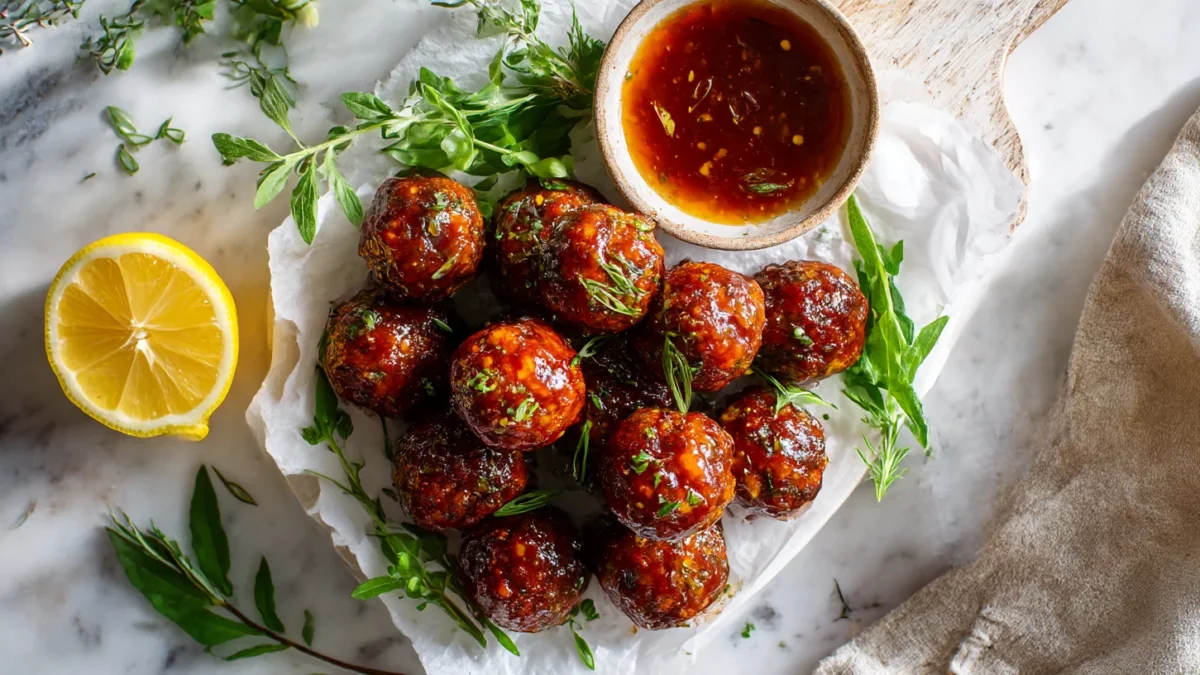
These gochujang meatballs are the bridge between a Tuesday weeknight and something that feels like a dinner party. The meatballs themselves are standard-issue good — a mix of beef and pork, seasoned simply — but the glaze is where things get addictive: gochujang paste for fermented chili heat, peach preserves for sweetness that rounds it off, soy sauce and rice vinegar to keep it from going cloying. The result is a sweet-spicy-sticky coating that makes you eat three meatballs when you meant to eat one.
Why You’ll Love These Gochujang Meatballs
They’re the most-requested appetizer and the easiest weeknight protein in one batch.
- Make-ahead everything — form meatballs and make glaze a day ahead.
- Oven-baked, not fried — less mess, more even cooking.
- Sweet heat that builds — gochujang’s heat sneaks up, but the peach keeps it friendly.
- Double-duty recipe — appetizer with toothpicks, main course over rice, slider on a bun.
- Freezer MVP — freeze batches for future weeknights.
Ingredients
A beef-pork mix gives you the best texture and flavor. All-beef works in a pinch — add 2 tbsp of olive oil to compensate for the missing pork fat.
- 1 lb ground beef (80/20)
- 1 lb ground pork
- ¾ cup panko breadcrumbs
- 2 large eggs
- 4 green onions, finely sliced
- 4 cloves garlic, minced
- 1 tbsp fresh grated ginger
- 1 tbsp soy sauce
- 1 tsp sesame oil
- ½ tsp black pepper
- For the glaze:
- 3 tbsp gochujang (Korean chili paste)
- 3 tbsp peach preserves or jam
- 2 tbsp soy sauce
- 1 tbsp rice vinegar
- 1 tbsp honey
- 1 tsp sesame oil
- Sesame seeds and sliced scallions for garnish
Equipment
- Rimmed sheet pan
- Parchment paper
- Small saucepan for the glaze
- Cookie scoop or tablespoon (for uniform sizing)
How to Make Gochujang Meatballs
Step 1 — Mix the meatballs (5 minutes)
Combine the ground beef, ground pork, panko, eggs, green onions, garlic, ginger, soy sauce, sesame oil, and black pepper in a large bowl. Mix with your hands just until combined — 30 seconds of squeezing and turning. Overworking the meat makes it dense. Use a tablespoon or small cookie scoop to form about 30 meatballs, roughly 1½ inches in diameter (a bit smaller than a golf ball). Place them on the parchment-lined sheet pan with 1 inch between each.
Step 2 — Bake (20 minutes)
Bake at 400°F for 20 minutes until the internal temperature reaches 165°F. The meatballs will be browned on the bottom and just starting to color on top. If you want more color, broil for 2 minutes at the end.
Step 3 — Make the glaze (3 minutes)
While the meatballs bake, combine the gochujang, peach preserves, soy sauce, rice vinegar, honey, and sesame oil in a small saucepan over medium heat. Stir until smooth and bubbling — about 2 minutes. It should be thick enough to coat the back of a spoon. If it’s too thick, add a tablespoon of water.
Step 4 — Coat the meatballs (3 minutes)
Transfer the baked meatballs to the saucepan with the glaze. Toss gently until every meatball is coated. The glaze is sticky — use a spatula, not tongs, or you’ll tear them apart. Return the glazed meatballs to the sheet pan and broil for 1–2 minutes to caramelize the glaze on the outside. Watch them — this goes from caramelized to scorched in seconds.
Step 5 — Serve (2 minutes)
Scatter sesame seeds and sliced scallions over the top. Serve with toothpicks as an appetizer, over steamed rice as a dinner, or on slider buns with pickled daikon as a sandwich.
Pro Tips
Use a scoop for uniform size. Meatballs that are the same size cook at the same rate. If some are golf-ball sized and others are walnut-sized, you’ll have a mix of overcooked and undercooked.
Don’t skip the panko. It absorbs the egg and creates a tender texture. Without it, the meatballs are denser and more like burger patties.
Taste the glaze before coating. If you want more heat, add another teaspoon of gochujang. If it’s too spicy, add a tablespoon of peach preserves. Adjust to your crowd.
The broil step is optional but recommended. It takes the glaze from saucy to lacquered, which is the whole point.
Variations & Substitutions
Sub peach with apricot or mango
Any stone fruit preserve works. Apricot is slightly more tart and lets more of the gochujang come through. Mango is sweeter and more tropical. Both are worth trying.
Chicken or turkey meatballs
Swap the beef-pork mix for ground chicken or turkey. These are leaner, so add 3 tbsp of olive oil to the mix to keep them moist. Bake the same way.
Air-fryer version
Air fry at 375°F for 12 minutes. Make the glaze in a bowl instead of a saucepan and toss the meatballs in it after they come out of the air fryer. Skip the broil step.
Thai-inspired version
Swap gochujang for sambal oelek and add a tablespoon of fish sauce to the meatball mix. Use mango preserves. Finish with fresh Thai basil and lime juice.
Storage & Reheating
Refrigerator: 4 days with the glaze, 5 days without.
Freezer: Freeze unglazed meatballs on a sheet pan (so they don’t stick together), then transfer to a freezer bag for up to 3 months. Thaw overnight, then warm and glaze.
Reheating: Oven at 350°F for 8 minutes with a drizzle of extra glaze, or microwave in 30-second bursts.
What to Serve With Gochujang Meatballs
Steamed jasmine rice is the obvious move — the glaze doubles as a rice sauce. For a full spread, our swicy gochujang wings make a double-Korean meat situation (in the best way). Start with our smashed cucumber salad to cut through the richness, or pair with our miso-glazed eggplant for an all-Asian-flavored dinner. Finish with something cold and sweet — our tropical açaí bowl works here.
Nutrition Information
Per serving (about 5 meatballs): approximately 420 calories, 28 g protein, 26 g carbohydrates, 24 g fat, 2 g fiber. Values are estimates.
Frequently Asked Questions
Where do I find gochujang?
Most grocery stores carry it in the Asian/international aisle — look for a red tub with Korean writing (brand: Chung Jung One is common). Asian markets will have more options. It keeps in the fridge for over a year.
Can I use sriracha instead of gochujang?
Sriracha is thinner, sweeter, and lacks the fermented depth of gochujang. It works in an emergency but you’ll lose the complex flavor. If using sriracha, add 1 tsp of miso paste to the glaze to approximate the umami.
Can I make these without pork?
Yes, use all ground beef (80/20). Add 2 tbsp olive oil to the mixture to compensate for the fat that pork would have contributed.
How many meatballs does this make?
About 30 meatballs (1.5-inch diameter). That’s 5–6 per person as a main course, or 10–12 people as an appetizer.
If you make these gochujang meatballs, leave a comment with the version you went with — classic peach, apricot swap, or something else entirely. The glaze recipe alone is worth keeping in your back pocket for chicken wings, roasted cauliflower, or even salmon. Save this one.