Black Garlic Glazed Salmon with Tamarind
Black garlic glazed salmon with tamarind — umami-rich, sweet-sour, and ready in just 20 minutes. Restaurant-quality seafood at home. Get the recipe.
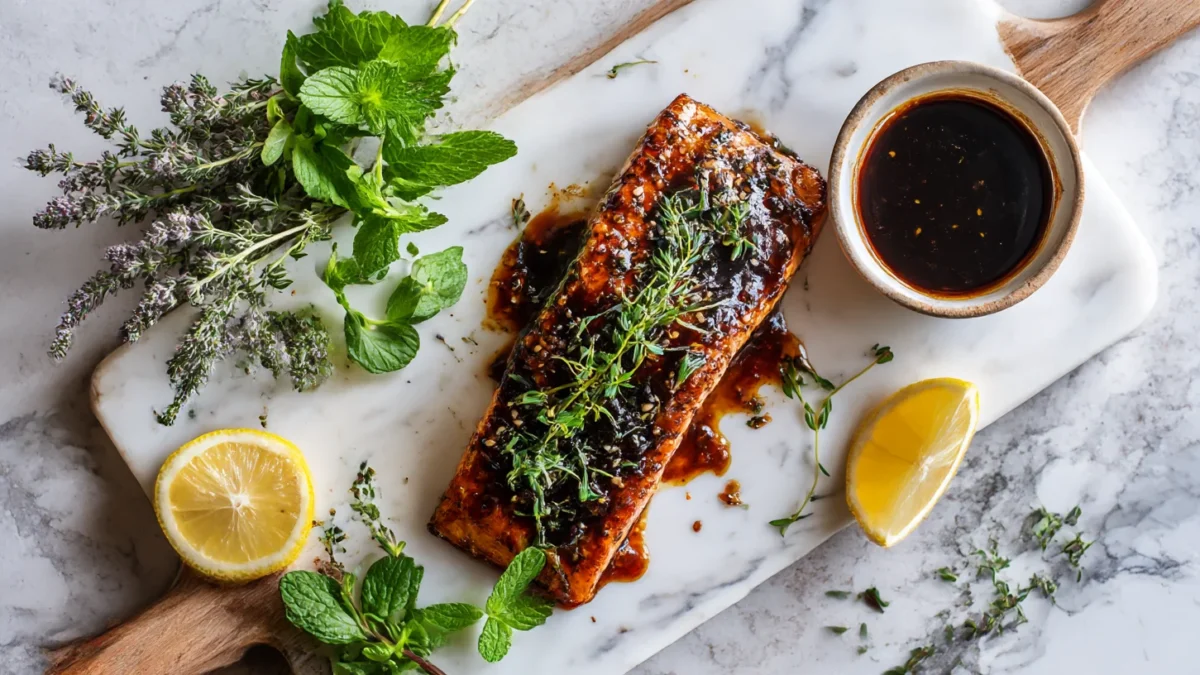
Black garlic is one of those ingredients that makes people pause and try to figure out what they’re tasting. It’s sweet, it’s savory, it has balsamic-like depth and a molasses richness — all from regular garlic that’s been fermented for weeks. Paired with tamarind’s sweet-sour punch, it creates a black garlic glazed salmon glaze that’s unlike anything you’ve had on fish. the whole dish takes 20 minutes and looks like it belongs in a restaurant.
Why You’ll Love This Black Garlic Glazed Salmon
- Black garlic glaze — umami-rich, sweet, and deeply complex.
- Tamarind brightness — cuts through the richness with sweet-sour tang.
- 20 minutes, one pan — restaurant-quality seafood on a weeknight.
- Crispy skin — the glaze caramelizes into a lacquered finish.
- Impressive but easy — perfect for dinner guests.
Ingredients
- 4 (6 oz each) skin-on salmon fillets (center-cut for even thickness)
- 4–5 black garlic cloves (mashed into a paste)
- 1 tbsp tamarind paste (seeded, from a jar)
- 2 tbsp soy sauce (low-sodium)
- 1 tbsp honey
- 1 tbsp rice vinegar
- 1 tsp sesame oil (toasted)
- 1 tsp fresh ginger (grated)
- 2 tbsp neutral oil (avocado or grapeseed) (for searing)
- 1 tbsp sesame seeds (toasted, for garnish)
- 2 scallions (thinly sliced)
Equipment
- Black garlic — found in specialty stores or online
- 12-inch stainless steel or cast iron skillet
- Small mixing bowl
- Microplane or fine grater
- Fish spatula (thin, flexible)
- Instant-read thermometer (optional but helpful)
- Fish spatula — thin and flexible for flipping delicate fillets
How to Make Black Garlic Glazed Salmon
Step 1 — Make the black garlic glaze (3 minutes)
Mash the black garlic cloves with the side of a knife until they form a smooth paste — they’re soft and sticky, so this takes about 30 seconds. In a small bowl, combine the black garlic paste, tamarind paste, soy sauce, honey, rice vinegar, sesame oil, and grated ginger. Whisk until smooth. Taste: it should be sweet, tangy, and deeply savory with a gentle funk from the black garlic. Set aside.
Step 2 — Sear the salmon skin-side down (5 minutes)
Pat the salmon fillets dry with paper towels — moisture is the enemy of crispy skin. Season the flesh side lightly with salt. Heat the neutral oil in a 12-inch skillet over medium-high heat until it shimmers and just barely smokes. Place the salmon fillets skin-side down in the pan. Press each fillet gently with a spatula for the first 10 seconds to prevent the skin from curling. Don’t touch them for 4 minutes. The skin will release naturally from the pan when it’s crispy.
Step 3 — Flip and glaze (4 minutes)
Flip the fillets carefully using a fish spatula. The skin should be deeply golden and shatteringly crispy. Reduce heat to medium. Spoon the black garlic glaze over the flesh side of each fillet. Cook for 2 to 3 more minutes, basting the salmon with the glaze by tilting the pan and spooning the pooled sauce over the top. The glaze will caramelize and turn glossy. The salmon is done when it registers 125°F in the center (medium) or 135°F (medium-well).
Step 4 — Rest and serve (2 minutes)
Remove the salmon from the pan and let it rest for 2 minutes on the serving plate. The residual heat will carry the internal temperature up another 5 degrees. Spoon any remaining glaze from the pan over the fillets. Scatter toasted sesame seeds and sliced scallions on top.
Pro Tips
Start with a screaming-hot pan for the skin. The single biggest mistake with salmon is not getting the pan hot enough. If the fillets don’t sizzle on contact, the pan isn’t ready. Wait another minute.
Don’t move the salmon for the first 4 minutes. The skin needs uninterrupted contact with the hot pan to crisp. If you peek or shift it, the skin tears and sticks. Trust the process — it will release when it’s ready.
Black garlic is fragile. Don’t cook the glaze over high heat or the sugars will burn. Add it after you flip the salmon and reduce the heat to medium. You want it to caramelize gently, not scorch.
Score the salmon skin before cooking. Make 3 to 4 shallow cuts through the skin (not into the flesh) with a sharp knife. This prevents the skin from curling during cooking and keeps the fillet flat against the pan for maximum crispiness.
Make extra glaze. The black garlic tamarind glaze keeps in the fridge for 2 weeks and is incredible on roasted chicken, grilled pork chops, or even roasted cauliflower. Double the batch and keep it on hand.
Pat the salmon very dry before searing. Surface moisture creates steam, which prevents the skin from crisping. Use multiple paper towels and press firmly. The drier the skin, the crispier it gets.
Use a neutral oil with a high smoke point. Avocado oil or grapeseed oil for searing — not olive oil, which burns at high heat. Save the olive oil for drizzling at the end if you like.
Variations & Substitutions
Black garlic glazed cod
Cod fillets are thinner and more delicate. Sear for 3 minutes skin-side down (or the equivalent side), flip, glaze for 2 minutes. The mild flavor of cod lets the glaze really shine.
Tamarind-free version
Replace the tamarind paste with 1 tablespoon of lime juice and 1 teaspoon of brown sugar. You lose some of the complex sourness but the glaze is still excellent.
Sheet pan version
Place salmon on a parchment-lined sheet pan, spoon glaze over the top, and roast at 425°F for 12 to 14 minutes. You won’t get the same crispy skin, but it’s hands-off and works for meal prep.
Storage & Reheating
Refrigerator: Store leftover salmon in an airtight container for up to 2 days. The glaze continues to flavor the fish as it sits.
Not recommended for freezing. Cooked salmon dries out when frozen and reheated.
Reheating: Eat leftovers cold over a salad, or gently warm in a 275°F oven for 8 minutes. Avoid the microwave — it overcooks the fish and makes the kitchen smell.
What to Serve With Black Garlic Glazed Salmon
This black garlic glazed salmon is stunning over steamed jasmine rice or alongside roasted broccoli. For a complete meal, pair it with a light cucumber salad to cut through the richness of the glaze.
If you love seafood dinners, browse our dinner recipe collection for more weeknight fish and shellfish ideas.
More seafood inspiration awaits in our dinner recipe collection — from weeknight fish to dinner-party showstoppers.
Nutrition Information
Per serving (1 of 4): approximately 380 calories, 35g protein, 10g carbohydrates, 22g fat, 0g fiber. Values are estimates.
Frequently Asked Questions
What does black garlic taste like?
Imagine balsamic vinegar, molasses, and roasted garlic had a baby. It’s sweet, tangy, and deeply umami with none of the sharp bite of raw garlic. If you haven’t tried it, this recipe is a great introduction.
Where do I buy black garlic?
Most Whole Foods and specialty grocery stores carry it in the produce section. It’s also available online. A jar lasts for months in the fridge. Black garlic paste (in a tube) is a good substitute if you can’t find whole cloves.
Can I use the glaze on other proteins?
Absolutely. It’s incredible on chicken thighs, pork chops, and even roasted cauliflower. Brush it on during the last 5 minutes of cooking so it caramelizes without burning.
How do I know when salmon is done?
An instant-read thermometer is the most reliable method: 125°F for medium (slightly translucent center), 135°F for medium-well. Without a thermometer, press the top gently — it should flake slightly but still feel moist. Overcooked salmon is dry and chalky.
Can I use the glaze on other fish?
The black garlic tamarind glaze works beautifully on cod, halibut, and even shrimp. For thinner fillets like cod, reduce the cook time by 2 minutes per side. For shrimp, sear for 90 seconds per side only.
If you make this black garlic glazed salmon, let us know if you tried the tamarind version or went without. either way, it’s the kind of weeknight dinner that feels like a special occasion. save it for your next time cooking for someone you want to impress. black garlic keeps for months in the fridge. once you start cooking with it, you’ll find yourself adding it to everything from mashed potatoes to burger patties.