Spring Pistachio Pesto Pizza with Asparagus & Ricotta
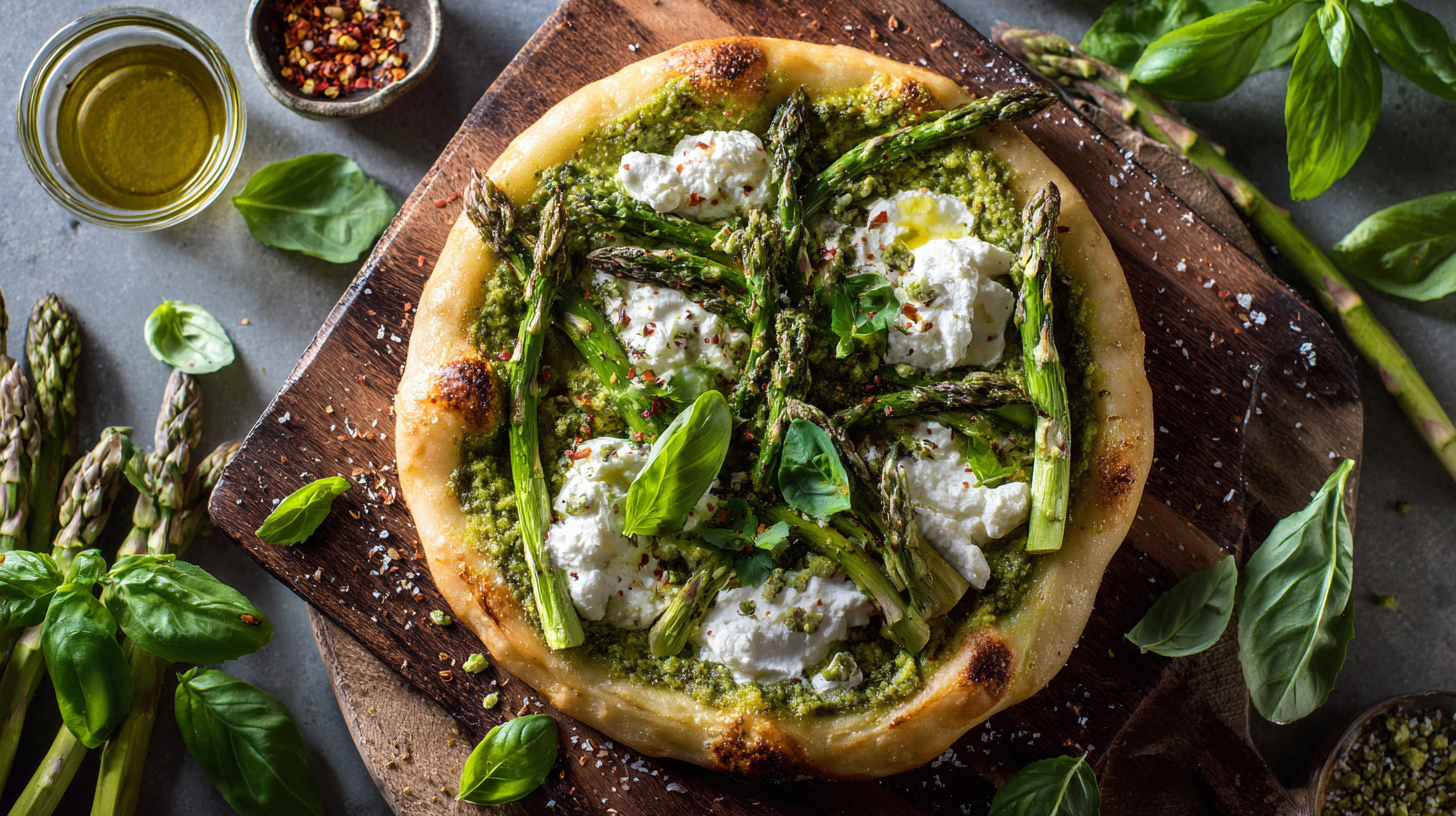
Fresh spring-forward homemade pizza topped with seasonal asparagus, creamy ricotta, and vibrant pistachio pesto. A perfect dinner recipe that celebrates spring
Spring Pistachio Pesto Pizza with Asparagus & Ricotta
Fresh spring-forward homemade pizza topped with seasonal asparagus, creamy ricotta, and vibrant pistachio pesto. A perfect dinner recipe that celebrates spring flavors with every bite.
As the days grow longer and farmers markets burst with verdant produce, there’s no better way to welcome the season than with a pizza that showcases spring’s finest offerings. This Spring Pistachio Pesto Pizza combines the nutty richness of toasted pistachios with the bright, herbaceous punch of fresh basil pesto, all balanced by the delicate crunch of blanched asparagus and the cloud-like creaminess of fresh ricotta. It’s a departure from heavy winter fare and a celebration of renewal on a crisp, golden crust.
Prep Time: 20 min
Cook Time: 15 min
Total Time: 35 min
Servings: 4
Ingredients
- 1 lb pizza dough (homemade or store-bought)
- 1/2 cup pistachios, shelled and toasted
- 1/4 cup fresh basil leaves
- 1/4 cup grated Parmesan cheese
- 1/4 cup olive oil
- 2 cloves garlic, minced
- 1 bunch asparagus, trimmed and cut into 2-inch pieces
- 1/2 cup ricotta cheese
- 1 tbsp lemon zest
- Salt and pepper to taste
- 1 tbsp olive oil for brushing
- Cornmeal for dusting
Ingredient Spotlight
Pizza Dough: The foundation of any great pizza starts with the dough. For this recipe, you can use either a homemade dough that has been properly fermented for at least 24 hours for optimal flavor and texture, or a high-quality store-bought variety. If using store-bought, let it sit at room temperature for 30-60 minutes before rolling to relax the gluten, making it easier to stretch without springing back. Look for dough balls that feel soft and pliable rather than tight and dense.
Pistachios: Raw, unsalted pistachios are ideal for the pesto, as they allow you to control the seasoning. Toasting them briefly in a dry skillet awakens their natural oils and intensifies their sweet, nutty flavor. Avoid roasted and salted pistachios, as they can make the pesto too salty and mask the delicate basil notes. If you can find Sicilian pistachios, they offer an especially vibrant green color and intense flavor.
Fresh Basil: Sweet basil with bright green, unblemished leaves will give you the most aromatic pesto. Avoid basil that has started to darken or wilt, as it can impart a bitter note. In a pinch, you can substitute half the basil with baby spinach for a milder flavor that still provides beautiful color.
Parmesan Cheese: Use freshly grated Parmigiano-Reggiano for the best flavor. Pre-grated cheese often contains anti-caking agents that can affect the texture of the pesto. A well-aged Parmesan provides nutty, umami-rich notes that complement the pistachios beautifully.
Asparagus: Look for firm, bright green stalks with tight, compact tips. Thinner spears are more tender and require less cooking time, while thicker stalks may need a minute or two longer in the blanching water. Snap off the woody ends rather than cutting them—the stalk will naturally break where the tender part meets the tough, fibrous base.
Ricotta Cheese: Whole-milk ricotta provides the creamiest, richest result. If you can find fresh ricotta from an Italian market or specialty grocer, it’s worth the splurge for its cloud-like texture and delicate sweetness. Drain excess liquid from the ricotta by placing it in a fine-mesh sieve for 15 minutes before using to prevent a soggy pizza.
Instructions
- Step 1: Preheat the Oven Preheat your oven to 475°F (245°C), positioning the rack in the lower third of the oven for the best crust development. If you’re using a pizza stone or steel, place it on the rack before preheating—it needs a full 30-45 minutes to reach the proper temperature. A properly heated stone creates “oven spring,” giving you a puffed, blistered crust with a crisp bottom. If you don’t have a stone, a heavy-duty baking sheet turned upside down works as an excellent substitute.
- Step 2: Make the Pistachio Pesto In the bowl of a food processor, combine the toasted pistachios, fresh basil leaves, grated Parmesan, and minced garlic. Pulse the mixture 8-10 times to roughly chop the nuts and herbs, then with the motor running, drizzle in the olive oil in a slow, steady stream. Process until the pesto is smooth but still retains a slightly chunky texture—over-processing can make it gluey. Taste and season with salt and freshly cracked black pepper. The pesto should be vibrant green, nutty, and balanced.
- Step 3: Blanch the Asparagus Bring a small pot of salted water to a rolling boil—the water should taste like the sea. Add the trimmed asparagus pieces and blanch for exactly 2 minutes. This partial cooking softens the fibers just enough while preserving the snap and bright green color. Immediately transfer the asparagus to a bowl of ice water using a slotted spoon. This “shocking” process stops the cooking instantly and locks in the vibrant color. Drain thoroughly and pat dry with paper towels.
- Step 4: Prepare the Dough Sprinkle a clean work surface generously with cornmeal—this prevents sticking and adds a pleasant crunch to the bottom of the crust. Place the room-temperature dough in the center and, using your fingertips, press outward from the center to create a 12-inch circle, leaving the edges slightly thicker for a naturally puffy crust. If the dough resists stretching, let it rest for 5-10 minutes to relax the gluten, then continue. Transfer to a pizza peel or parchment-lined baking sheet.
- Step 5: Assemble the Base Using a pastry brush, lightly coat the entire surface of the dough with olive oil—this creates a moisture barrier that prevents the pesto from making the crust soggy. Using the back of a spoon, spread the pistachio pesto evenly over the dough, leaving a 1-inch border around the edges for the crust to rise and crisp. Don’t overload the pizza with pesto; a thin, even layer ensures balanced flavors without overwhelming the delicate crust.
- Step 6: Add Toppings Using two spoons, dollop the ricotta cheese in evenly spaced mounds across the pesto-covered dough—about 8-10 dollops. The ricotta will spread slightly as it bakes, creating pockets of creamy goodness throughout each slice. Arrange the blanched asparagus pieces artfully over the top, distributing them evenly so each bite includes a bit of asparagus. Finally, sprinkle the lemon zest evenly across the entire pizza.
- Step 7: Bake to Perfection Carefully slide the pizza onto the preheated pizza stone or baking sheet in the oven. Bake for 12-15 minutes, rotating the pizza 180 degrees halfway through for even browning. You’re looking for a deeply golden-brown crust with blistered bubbles, bubbling ricotta with light golden spots, and asparagus tips that are just beginning to char at the edges.
- Step 8: Rest and Serve Remove the pizza from the oven and transfer it to a cutting board. Let it rest for 2 full minutes before slicing—this allows the cheeses to set slightly and prevents the toppings from sliding off when you cut it. Use a sharp pizza cutter to slice into 8 wedges. Serve immediately while the crust is at its crispiest and the cheeses are gloriously warm.
Chef’s Tips for Success
- Dough Temperature Matters: Cold dough is difficult to stretch and springs back aggressively. Always let refrigerated dough come to room temperature for at least 30 minutes before shaping. The ideal dough temperature is around 65-70°F for optimal extensibility.
- Toast Those Pistachios: Don’t skip toasting the pistachios. A quick 3-4 minute toast in a dry skillet over medium heat transforms their flavor from raw and flat to nutty and complex. Let them cool slightly before processing.
- Don’t Skip the Ice Bath: Blanching without shocking means the asparagus continues to cook from residual heat, turning it dull green and mushy. The ice bath is essential for that vibrant color and crisp-tender texture.
- Less is More: It’s tempting to load the pizza with toppings, but too much weight can make the center soggy and prevent the crust from crisping. Stick to the measurements provided for the perfect balance of toppings to crust.
- Cornmeal vs. Flour: Use cornmeal to dust your peel or baking surface. Cornmeal adds a pleasant crunch and authentic pizzeria texture to the bottom of the crust, while flour can burn at high temperatures.
Delicious Variations
Once you’ve mastered the base recipe, try these creative twists to keep your pizza nights exciting:
- Prosciutto & Pea: Add thin slices of prosciutto and fresh spring peas alongside the asparagus for a salty-sweet combination. Add the prosciutto after baking so it stays tender.
- Burrata Instead of Ricotta: Replace the ricotta with a whole ball of burrata placed in the center right after baking. Slice it open so the creamy center oozes over the pizza.
- Spicy Pistachio Pesto: Add a pinch of red pepper flakes to the pesto for a subtle heat that plays beautifully against the cool ricotta and sweet asparagus.
- Go Vegan: Use a vegan pesto with nutritional yeast instead of Parmesan, swap the ricotta for a dairy-free almond-based version, and use vegan pizza dough. The result is just as vibrant and satisfying.
Storage & Reheating
Store leftover pizza slices in an airtight container in the refrigerator for up to 3 days. Place parchment paper between slices to prevent sticking. For reheating, skip the microwave which makes the crust chewy. Instead, reheat in a 375°F oven for 8-10 minutes, or use a skillet on medium heat with a lid—the bottom crisps up while steam gently warms the toppings. You can also freeze baked slices wrapped individually for up to 2 months.
Serving Suggestions
This Spring Pistachio Pesto Pizza shines as a main course, but thoughtful pairings elevate it to a memorable meal. Serve with a crisp Sauvignon Blanc or Pinot Grigio, and pair with a simple arugula salad dressed with lemon vinaigrette. This pizza is perfect for spring dinner parties, casual weeknight dinners, weekend lunches, or even brunch with a fried egg on top.
Nutrition Information
| Calories | 320 |
| Protein | 14g |
| Carbohydrates | 38g |
| Fat | 14g |