High-Protein Cottage Cheese Alfredo Pasta
Creamy cottage cheese alfredo pasta packs 35g protein per serving with the rich flavor of classic alfredo. Ready in just 20 minutes. Get the recipe.
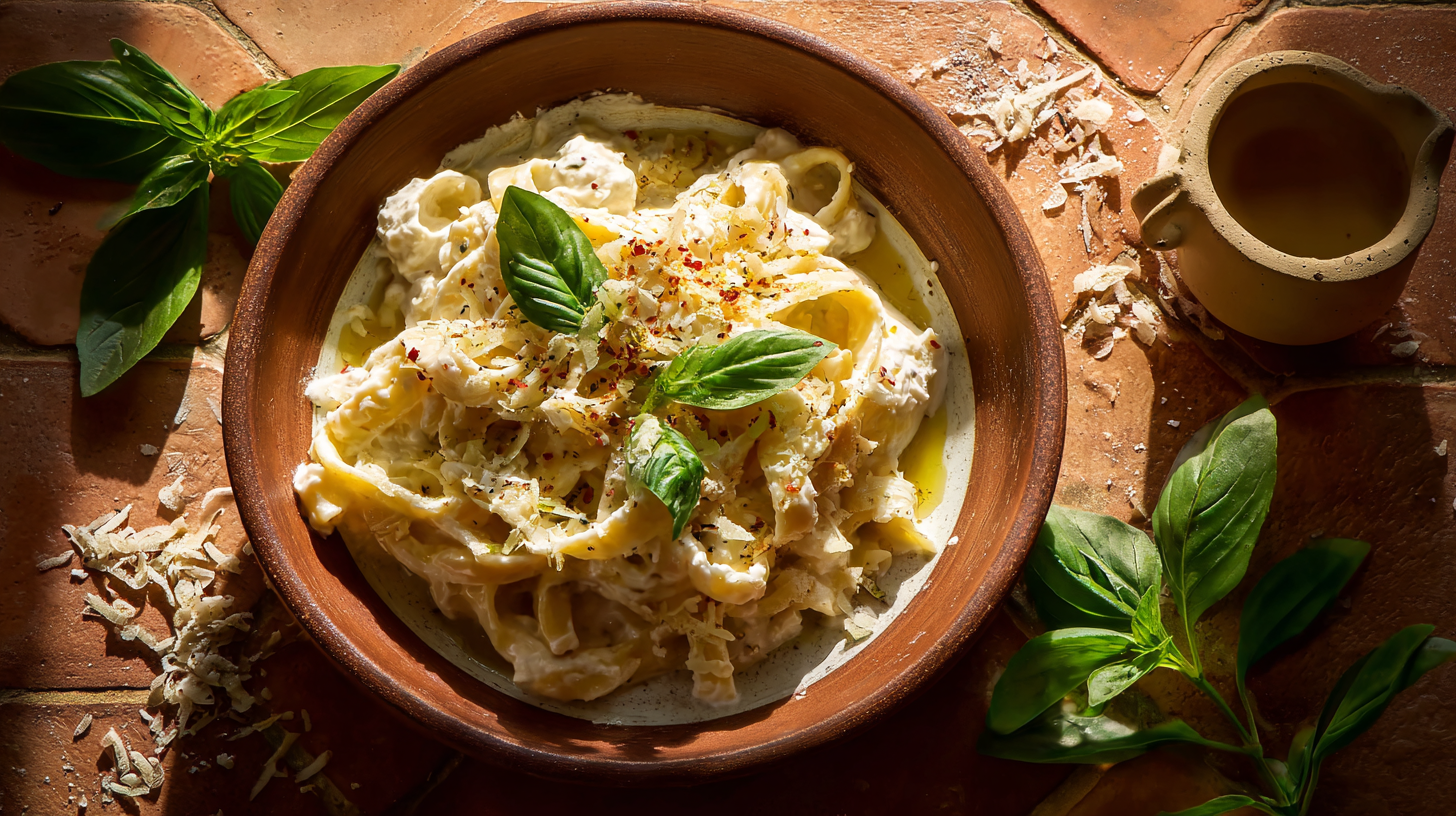
Cottage cheese alfredo pasta sounds like one of those internet hacks that promises too much, but this version actually delivers the rich, creamy sauce you expect from a classic alfredo — with a serious protein boost hiding in every bite. Cottage cheese blends into an impossibly smooth sauce that coats each strand of fettuccine in garlicky, parmesan-laced creaminess. No one at the table will guess the secret ingredient, and each serving packs 35 grams of protein without any protein powder in sight.
Why You’ll Love This Cottage Cheese Alfredo Pasta
- 35g protein per serving — the cottage cheese adds body and nutrition without a chalky taste.
- Ready in 20 minutes — from boiling water to bowl in less time than delivery.
- Pantry-friendly — pasta, garlic, and parmesan are probably already in your kitchen.
- Kid-approved — it tastes like the alfredo they already love.
- No cream needed — the cottage cheese brings the creaminess and the protein.
Ingredients
- 1 lb fettuccine pasta (dried or fresh — fresh cooks in 2 to 3 minutes)
- 1 1/2 cups full-fat cottage cheese (small curd) (full-fat gives the smoothest result; do not use fat-free)
- 1/2 cup whole milk (helps the cottage cheese blend smooth)
- 1 cup parmesan cheese, finely grated (use the real stuff — Parmigiano-Reggiano from a wedge)
- 3 tbsp unsalted butter
- 4 garlic cloves, minced (about 1 1/2 tablespoons)
- to taste salt (the parmesan is salty, so taste before adding)
- 1/2 tsp black pepper (freshly cracked)
- pinch nutmeg (optional but traditional in alfredo sauce)
- for garnish fresh parsley, chopped (optional)
Equipment
- Large pot for boiling pasta
- 12-inch skillet or saute pan — wide enough to toss the pasta in the sauce
- High-speed blender or food processor
- Microplane for the parmesan
- Pasta tongs and a ladle for the starchy pasta water
How to Make Cottage Cheese Alfredo Pasta
Step 1 — Boil the pasta (10 minutes)
Bring a large pot of generously salted water to a rolling boil — the water should taste like the sea, which is the only chance you have to season the pasta itself. Add the fettuccine and cook according to package directions minus 1 minute (you want it just shy of al dente because it will finish cooking in the sauce). Before draining, scoop out 1 1/2 cups of the starchy pasta water and set it aside. This starchy liquid is what transforms the sauce from thick and gloppy to silky and coating.
Step 2 — Blend the cottage cheese base (3 minutes)
While the pasta cooks, combine the cottage cheese, milk, and half the parmesan (1/2 cup) in a blender. Blend on high for 60 to 90 seconds until the mixture is completely smooth with no visible curds remaining. If you see any graininess, blend another 30 seconds. The key to a convincing alfredo is getting this base silky before it ever hits the pan. Pre-blending saves you from a lumpy, cottage-cheese-textured sauce that nobody wants on their pasta.
Step 3 — Build the garlic butter (3 minutes)
Melt the butter in your wide skillet over medium heat. Add the minced garlic and cook, stirring constantly, for about 90 seconds until it turns fragrant and just barely golden at the edges. Do not let the garlic brown — burnt garlic turns bitter and will ruin the sauce. If it browns too fast, pull the pan off the heat for 15 seconds.
Step 4 — Combine pasta and sauce (3 minutes)
Pour the blended cottage cheese mixture into the garlic butter and stir to combine. Let it warm through for about 1 minute, then add the drained pasta directly to the skillet. Toss vigorously with pasta tongs, adding the reserved pasta water a few tablespoons at a time — about 1/4 cup to start — until the sauce coats each strand evenly and clings when you lift the tongs. The sauce should look glossy and creamy, not thick and sticky. Keep the heat at medium; too much heat will cause the cottage cheese sauce to seize and become grainy.
Step 5 — Finish with parmesan and season (1 minute)
Remove the skillet from the heat and toss in the remaining 1/2 cup of parmesan. The residual heat will melt it into the sauce without overcooking the cheese. Add the nutmeg and black pepper, and taste for seasoning. Add salt if needed, but remember the parmesan already brings a lot. Serve immediately in wide, shallow bowls with chopped parsley on top.
Pro Tips
Blend the cottage cheese until it is truly smooth. Any remaining curds will be visible and textural in the sauce. A high-speed blender works better than a food processor here. For a comparison of blenders and their performance with thick mixtures, The Wirecutter’s blender reviews are a practical resource.
Always undercook the pasta by 1 minute. The pasta continues absorbing moisture and softening in the sauce. If you cook it to al dente in the water, it will be mushy by the time it hits the bowl.
Reserve more pasta water than you think you need. You can always add more, but you cannot take it out. The starch in the water is the difference between a tight, clumpy sauce and one that flows. Start with 1/4 cup and add more as you toss.
Use full-fat cottage cheese. Low-fat versions have more water and less protein, which results in a thinner sauce and curdles more readily under heat. Full-fat small curd works best.
Do not add the parmesan over direct heat. High heat causes the proteins in the cheese to seize and turn stringy. Off the heat, it melts into a glossy, smooth finish.
Variations & Substitutions
High-protein chicken alfredo
Slice 2 chicken breasts into thin cutlets, season with salt and pepper, and sear in a hot skillet with 1 tablespoon of olive oil — about 4 minutes per side. Let rest for 3 minutes, then slice and toss into the pasta. This adds another 30 grams of protein per serving on top of the cottage cheese base.
Veggie-loaded version
Add 2 cups of baby spinach and 1 cup of frozen peas to the pasta in the last minute of boiling. The residual heat wilts the spinach and thaws the peas. Drain and toss everything together with the sauce. The peas add sweetness and more protein; the spinach adds color and nutrients.
Lighter version with half the butter
Reduce the butter to 1 tablespoon and increase the milk to 3/4 cup. The sauce will be slightly less rich but still creamy thanks to the cottage cheese. This cuts about 50 calories per serving while keeping the protein numbers high.
Storage & Reheating
Refrigerator: Store in an airtight container for up to 3 days. The sauce will thicken significantly as it cools — this is normal and happens with all cream-based pasta sauces.
Freezer: Freeze in individual portions for up to 2 months. Thaw overnight in the refrigerator.
Reheating: Warm in a skillet over low heat with 2 to 3 tablespoons of milk or cream stirred in to loosen the sauce. Cover and stir every 2 minutes until heated through. Microwave reheating works but the texture is better on the stovetop. Avoid high heat, which can cause the sauce to break and look oily.
What to Serve With Cottage Cheese Alfredo Pasta
This cottage cheese alfredo stands on its own, but a crisp side salad makes it feel like a complete meal. Our classic Caesar salad is the ideal partner — the sharp, lemony dressing cuts through the richness of the alfredo perfectly. If you want to add protein without cooking a separate dish, our high-protein chicken burrito bowl is a fast, satisfying option. For a lighter side, try our broccoli burrata pasta salad — the fresh vegetables and creamy burrata complement the warm alfredo nicely.
Nutrition Information
Per serving (1/4 of recipe): approximately 480 calories, 35 g protein, 52 g carbohydrates, 14 g fat, 2 g fiber. Values are estimates and will vary depending on the specific cottage cheese and pasta brands used.
Frequently Asked Questions
Can you taste the cottage cheese in the final dish?
Not if you blend it properly. When blended until completely smooth, the cottage cheese becomes indistinguishable from a traditional cream-based sauce. The parmesan and garlic do most of the heavy lifting flavor-wise. Most people cannot identify the secret ingredient.
What kind of cottage cheese works best?
Full-fat small-curd cottage cheese blends the smoothest. Brands like Good Culture or Nancy’s have a creamier texture than generic store brands. Avoid large-curd or whipped varieties — large curd leaves gritty bits, and whipped has too much air incorporated.
Can I use a different pasta shape?
Fettuccine is traditional because the wide, flat surface holds the most sauce, but penne, rigatoni, and farfalle all work well. Short, ridged shapes trap the sauce in their crevices. Avoid very thin pasta like angel hair — the sauce is too heavy for it and the strands clump together.
Is this recipe gluten-free?
The sauce itself is gluten-free. To make the whole dish gluten-free, swap in a gluten-free fettuccine made from brown rice or chickpea flour. Chickpea pasta adds even more protein per serving.
Can I make the sauce ahead of time?
Blend the cottage cheese base up to 2 days ahead and store it in the refrigerator. When you are ready to eat, make the garlic butter, warm the blended base, and toss with freshly cooked pasta. The sauce comes together in under 5 minutes this way.
This is the recipe that converts people who think healthy pasta is an oxymoron. The cottage cheese disappears into a sauce so creamy and rich that the only thing anyone will notice is how satisfied they feel afterward. It is fast enough for a Tuesday night and good enough to serve when you have company. Make it once and it will become your default weeknight pasta. Save this post — you will be coming back to it.